

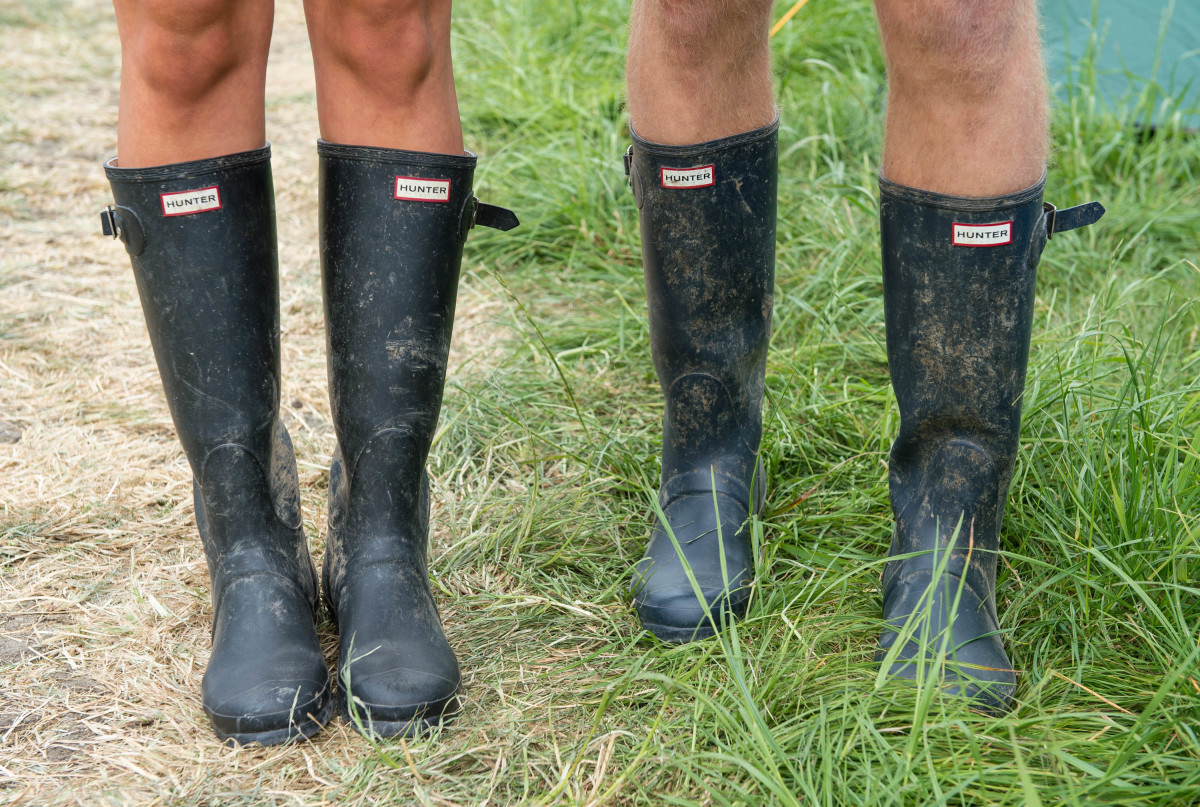
Quick answer: are Hunter wellies worth it for festivals?
For most festival-goers, no — not at full price. Hunter Original Tall wellies cost £130–£160. The Dunlop Festival at £20 keeps your feet just as dry in mud. Where Hunters genuinely justify themselves: comfort over multiple festival seasons, the adjustable back gusset on the Hunter Original Tall for wider calves, and the prestige factor if that matters to you. If you attend two or more camping festivals per year for several years, the cost per use of a Hunter becomes reasonable. For one festival per year, there are far better value options.
Hunter wellies are the most visible brand at UK festivals. Every Glastonbury photo contains them. But visibility and value are different things. This guide gives an honest answer on whether Hunters are worth the price for festival use specifically.
For the full festival welly comparison including Hunter and all alternatives, see our best festival wellies UK guide.
What Hunter wellies actually offer
Quick answer: what makes Hunter wellies different from cheaper alternatives?
Three things: (1) natural rubber construction — more flexible and durable than vulcanised rubber used in budget wellies, (2) the adjustable back gusset on the Hunter Original Tall — allows the shaft to be widened for wider calves, solving a fit problem many people have with standard wellies, (3) longevity — a Hunter welly maintained correctly lasts 5–10 years of regular use versus 1–3 years for budget alternatives. None of these improve waterproofing — all wellies are equally waterproof.
| Feature | Hunter Original (~£130–£160) | Dunlop Festival (~£18–£25) |
|---|---|---|
| Waterproofing | ✅ Complete | ✅ Complete |
| Mud performance | ✅ Excellent | ✅ Excellent |
| Material | Natural rubber — more flexible | Vulcanised rubber — stiffer |
| Adjustable fit | ✅ Back gusset on Tall models | ❌ Fixed shaft |
| Comfort lining | Basic — add insoles | Minimal — add thick socks |
| Longevity | 5–10 years with care | 1–3 seasons |
| Price | ~£130–£160 | ~£18–£25 |
| Cost per festival (5 years, 2/yr) | ~£13–£16 per festival | ~£3–£4 per festival (replacing annually) |
The honest case for Hunter wellies at festivals
Hunters do have genuine advantages — they are just not advantages that matter equally to every buyer:
- Adjustable calf fit: the back gusset on the Hunter Original Tall is a genuine solution for people with wider calves who find standard wellies impossible to get on. If this is you, Hunters may be the only mainstream option that fits
- Natural rubber flexibility: noticeably less stiff than budget wellies, which reduces the friction-based fatigue on long walking days
- Longevity: a well-maintained Hunter lasts years. If you attend Glastonbury, Download, and Reading every year, the maths eventually works in their favour
- Resale value: Hunter wellies hold resale value better than any other welly brand
The honest case against Hunter wellies at festivals
- They do not keep your feet any drier than a £20 alternative — all wellies are waterproof
- Festival use is hard on wellies — mud, being stood on, rough ground, and rough treatment in rucksacks shortens any welly’s life
- Hunter wellies crack without proper maintenance — they need to be stored correctly (not in sunlight, treated with Hunter boot buffer) or the rubber deteriorates faster than budget alternatives
- The price premium funds the brand more than it funds meaningful performance improvement for festival use specifically
Better alternatives at lower price points
Quick answer: what are the best alternatives to Hunter wellies for festivals?
The Aigle Parcours 2 (~£80–£100) is widely considered a better-built welly than Hunter at a lower price — natural rubber, excellent comfort, and a reputation among farming and outdoor professionals that Hunters have lost. The Le Chameau Vierzonord (~£90–£120) is another premium alternative with better construction than Hunter at a similar or lower price point. Both are better value for serious festival-goers than Hunter at full price.
The verdict
Hunter wellies are worth it if: you attend multiple camping festivals per year over several years, you have wide calves that standard wellies do not accommodate, or the aesthetic matters to you and you are willing to pay for it.
Hunter wellies are not worth it if: you attend one festival per year, you are buying specifically for a single event, or you want the best waterproofing performance per pound spent.
The sweet spot for most festival-goers is the £40–£80 range — Barbour Abbey, Bogs Classic Mid, or Joules Bampton — where you get genuinely better comfort and construction than budget wellies without the Hunter price premium.
Related reading
- 👢 Best Festival Wellies UK — full comparison
- 👟 Wellies vs Walking Boots for Festivals
- 💰 Best Festival Wellies Under £30
Frequently asked questions
Are Hunter wellies worth it for Glastonbury?
At full price, only if you attend multiple festivals per year over several years or have wide calves that standard wellies cannot accommodate. A £20 Dunlop Festival welly keeps your feet just as dry. The Hunter advantage is comfort, flexibility, and longevity — not waterproofing.
How long do Hunter wellies last?
With proper maintenance — stored away from sunlight, cleaned after use, treated with Hunter boot buffer — Hunter wellies last 5–10 years. Without maintenance, the natural rubber cracks and deteriorates in 2–3 years, similar to budget alternatives.
What is the best alternative to Hunter wellies for festivals?
The Aigle Parcours 2 (£80–£100) and Le Chameau Vierzonord (£90–£120) are considered better built than Hunter at similar or lower prices. For the best value in the mid-range, the Barbour Abbey (£40–£55) offers significantly better comfort than budget wellies without the Hunter premium.
Do Hunter wellies come in wide fit?
The Hunter Original Tall has an adjustable back gusset that allows the shaft to be widened — the main practical advantage over most competitors. This is genuinely useful for people with wider calves who cannot get standard wellies on. Hunter also produces a wide fit range in some styles.
Discover more from The Mosh Manual
Subscribe to get the latest posts sent to your email.