

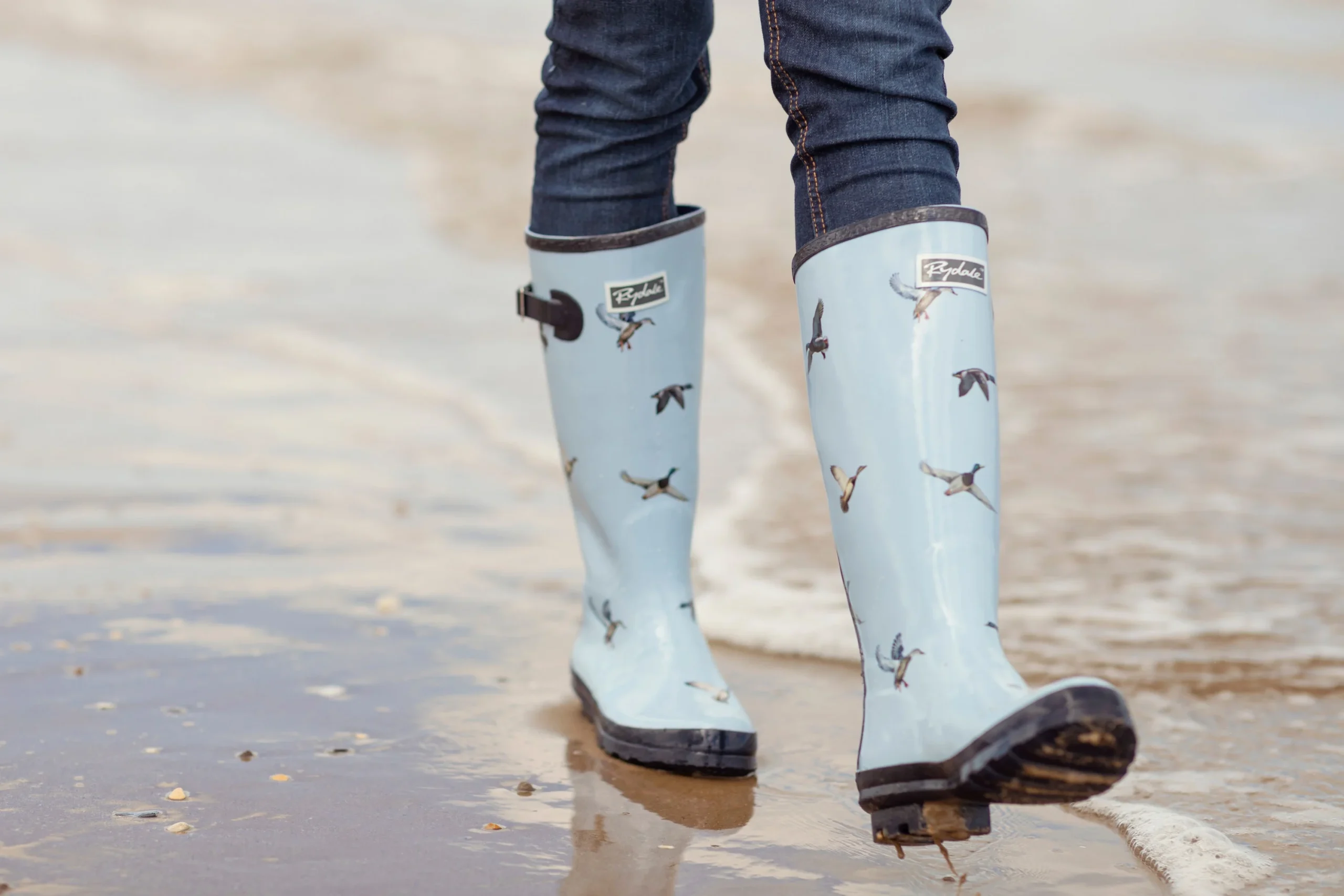
Quick answer: how do I stop wellies rubbing at a festival?
Four things that work: (1) thick cushioned welly socks — not thin cotton, (2) blister prevention balm or zinc oxide tape on the heel and ankle before you leave camp each morning, (3) the right welly size — snug but not tight, no excess movement inside the boot, (4) a Compeed blister plaster the moment you feel a hot spot — do not wait until the blister has formed. The back of the heel and the inside of the calf are the primary rubbing points in wellies.
Welly blisters are one of the most common and most preventable festival injuries. The combination of rubber that does not flex, moisture from sweat and rain, and long walking days creates ideal blister conditions. Getting this right makes an enormous difference to how your feet hold up across a 4-day festival.
For the complete festival foot care and blister guide, see our festival first aid kit guide and our best festival wellies UK guide.
Why wellies rub
Wellies rub because rubber does not flex or mould to your foot the way leather or fabric footwear does. The primary friction points are:
- The back of the heel — the rigid rubber back panel moves against your heel as you walk, particularly if the welly is slightly too large
- The inner calf — the top of the welly shaft rubs against the calf on the upstroke, particularly in full-height wellies
- The little toe — if the welly is too narrow, lateral pressure causes blisters on the outer edge of the foot
Prevention — before you leave camp
Step 1: the right socks
Quick answer: what are the best socks to stop wellies rubbing?
Thick cushioned welly socks or merino wool hiking socks — not thin cotton socks. Thick socks do three things: they provide cushioning between your foot and the rubber, they wick moisture away from your skin, and they fill more of the space inside the welly which reduces the movement that causes rubbing. Browse cushioned welly socks on Amazon. One pair per day minimum at a festival.
Step 2: blister prevention balm or tape
Body Glide or a similar anti-friction balm applied to the heel and ankle before you put your wellies on each morning creates a lubricating barrier between your skin and the rubber. It wears off over a long day, so reapply at midday if you can.
Zinc oxide tape (the white sports tape used by athletes) applied directly to known hot spots before putting socks on provides a physical barrier. It stays in place better than balm over a full day’s walking and is the professional athlete’s choice for blister prevention. Apply to heel, ankle, and any other known problem area before leaving camp.
Step 3: correct welly sizing
Quick answer: how should festival wellies fit?
Wellies should fit snugly with thick socks on — no excess movement inside the boot. If your foot slides around inside the welly, the heel will rub regardless of socks or balm. Most people size up half a size for thin socks but buy true to size when wearing thick welly socks. Try wellies on with the socks you intend to wear at the festival.
Step 4: wear them in before the festival
New wellies benefit from being worn around the house or garden for a few hours before the festival. Rubber is stiff when new — a small amount of wear reduces the initial harshness of the contact points. Do not debut new wellies on day one of a 4-day festival.
Treatment — when rubbing starts
Quick answer: what should I do when wellies start rubbing at a festival?
Act immediately at the first sign of rubbing — a hot spot or mild soreness. Apply a Compeed hydrocolloid blister plaster to the area before a blister forms. Once a hot spot becomes a blister, treatment is harder and recovery takes longer. The rule: feel it, treat it, do not wait. Also add zinc oxide tape over the top of the Compeed for extra protection if you plan to keep walking.
If a blister has already formed:
- Clean the area with an antiseptic wipe
- Apply a Compeed hydrocolloid plaster directly over the blister — do not burst it
- If the blister has burst, clean thoroughly, remove loose skin, apply antiseptic cream, then cover with Compeed
- Add a layer of zinc oxide tape over the top for extra protection
- Monitor for infection — spreading redness, warmth, pus — go to the medical tent if these develop
The festival blister kit
| Item | Use | Get it |
|---|---|---|
| Thick cushioned welly socks | Prevention — most important item | Amazon |
| Body Glide or anti-friction balm | Prevention — apply to heel and ankle daily | Amazon |
| Zinc oxide tape | Prevention and treatment — physical barrier | Amazon |
| Compeed blister plasters (mixed box) | Treatment — the moment a hot spot develops | Amazon |
| Antiseptic wipes | Cleaning before applying dressings | Amazon |
| Antiseptic cream (Savlon) | For burst blisters before covering | Amazon |
Daily foot care routine at a festival
- Morning: apply blister prevention balm to heel and ankle, put on clean thick socks, check any existing Compeed plasters are secure
- Afternoon: check feet at your first return to camp — address any hot spots before they become blisters
- Evening: remove wellies and socks immediately when back at camp, wipe feet with a baby wipe and dry thoroughly between toes, let feet air before sleeping, apply antifungal powder inside boots
Related reading
Frequently asked questions
Why do wellies rub so much at festivals?
Rubber does not flex or mould to your foot. Combined with long walking days, moisture from sweat and rain, and often thin socks, the back of the heel and the calf are subjected to repetitive friction. The solution is thick socks, blister prevention balm, and correct sizing.
Does vaseline stop wellies rubbing?
Vaseline works as a short-term anti-friction barrier but washes off with sweat faster than dedicated products like Body Glide. Body Glide or similar anti-friction balms last significantly longer and are worth using instead of Vaseline for all-day festival wear.
Should I put plasters inside my wellies to stop rubbing?
Plasters inside wellies move around and bunch up. Apply blister prevention balm or zinc oxide tape directly to your skin before putting on socks — this stays in place and is more effective than trying to pad the inside of the welly.
Discover more from The Mosh Manual
Subscribe to get the latest posts sent to your email.


One thought on “How to Stop Wellies Rubbing at a Festival: Prevention and Treatment Guide”