

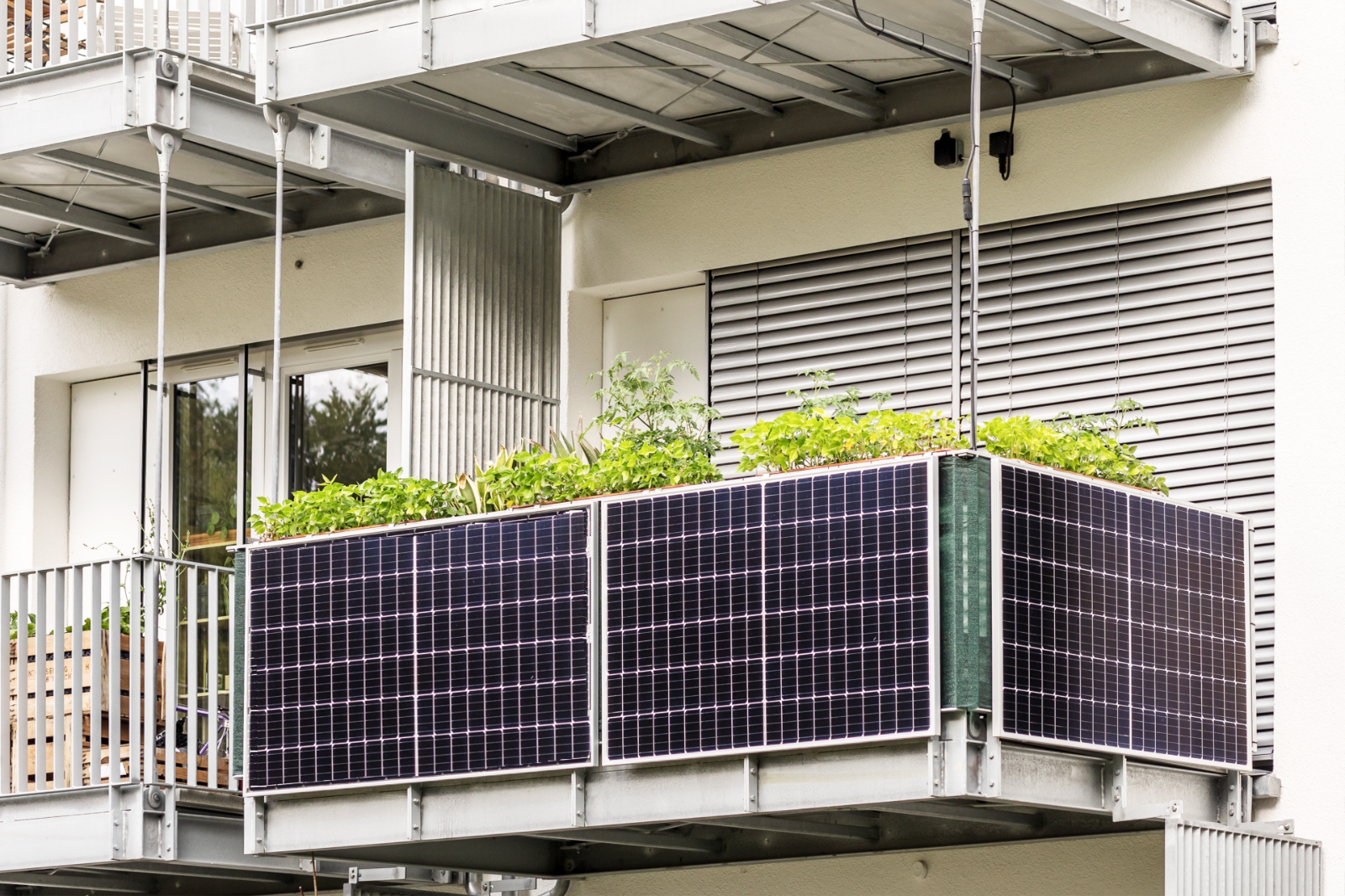
Quick answer: can I get solar panels on my balcony in the UK?
Yes — balcony solar panels are legal in the UK for renters and homeowners. A fully portable system (panel + power station, no connection to home wiring) requires zero permission. A grid-connected microinverter system that feeds power into your home circuits requires a G98 notification to your local Distribution Network Operator within 28 days of installation and must currently be connected by a qualified electrician. True plug-in systems are expected to be legalised at up to 800W AC in 2026–2027 following a UK government safety review. The Renters’ Rights Act 2025 means landlords cannot unreasonably refuse requests to install solar.
Balcony solar is the fastest-growing segment of the UK solar market — and for good reason. Millions of renters and flat dwellers have been locked out of rooftop solar for years. A balcony system changes that. You do not need a south-facing roof, planning permission, or a landlord who enthusiastically embraces renewables. You need a balcony, a panel, and the knowledge to navigate the (genuinely straightforward) UK rules.
For the full home solar power guide covering every setup from portable to off-grid, see our home solar power UK guide.
Is balcony solar legal in the UK?
Quick answer: are balcony solar panels legal in the UK?
Yes. Balcony solar panels are fully legal in the UK. The distinction is between portable systems (no grid connection required — zero paperwork) and grid-connected systems (G98 notification required, electrician for final connection). Most balcony setups fall under 3.68kW, which means they use the simpler G98 process — notify after installation, no pre-approval needed. Plug-in systems connected directly to a standard wall socket are not yet approved for grid connection, but pure off-grid portable setups have no restrictions whatsoever.
The three balcony solar routes in the UK
| System type | How it works | Permission needed | Electrician needed | Grid export possible? |
|---|---|---|---|---|
| Portable (panel + power station) | Panel charges a portable battery station — no home wiring connection | None | No | No |
| Grid-connected microinverter | Panel → microinverter → dedicated fused spur → home circuits | G98 notification (post-install) | Yes — for final connection | Yes (with SEG registration) |
| Plug-in (future — not yet legal) | Panel → microinverter → standard wall socket | Expected 2026–2027 | Not required (when legalised) | Limited |
Renter rights — what the law says in 2026
Quick answer: can my landlord refuse balcony solar panels?
Not without a valid reason. The Renters’ Rights Act 2025 states that landlords cannot unreasonably refuse a tenant’s request to make energy-efficiency improvements, which explicitly includes solar panels. Reasonable grounds for refusal remain — structural concerns about the balcony’s integrity, or the building’s electrical capacity — but aesthetic preference or simple reluctance are not valid grounds. Always request permission in writing. You will typically need to fund the installation yourself, but the right to request it is now legally protected.
How to approach your landlord — what works
- Start with a portable system: if you opt for a panel + power station setup (no grid connection), you technically do not need to ask at all — it is no different from a portable appliance. That said, informing your landlord builds goodwill
- For grid-connected systems: put the request in writing. Frame it as improving the property’s EPC rating at no cost to the landlord — this is genuinely in their interest as EPC requirements tighten
- Offer to restore on departure: commit in writing to removing the system or transferring it to the next tenant if they want it. This removes the main landlord concern
- Provide a professional plan: a quote from an MCS-registered installer demonstrating G98 compliance and BS 7671 adherence removes most objections
Portable vs grid-connected — which is right for you?
| Factor | Portable (panel + power station) | Grid-connected microinverter |
|---|---|---|
| Upfront cost | ~£400–£900 | ~£800–£1,800 (inc. electrician) |
| Permission required | None | Landlord consent + G98 |
| How power is used | Plug devices directly into the station | Displaces grid consumption in real time |
| Night use | ✅ Yes — draws from stored battery | ❌ No — only during daylight without separate battery |
| Portability | ✅ Take it camping, to a festival, to next property | ❌ Fixed installation |
| SEG export payments | ❌ Not applicable | ✅ Yes — with MCS cert and smart meter |
| Best for | Renters, flat dwellers, flexibility seekers | Long-term occupants, homeowners wanting grid integration |
Costs and kit options
Quick answer: how much does a balcony solar system cost in the UK?
A portable balcony setup (panel + power station) costs £400–£900. A grid-connected 400Wp microinverter system costs approximately £500–£800 for hardware plus £200–£400 for electrician installation — total £700–£1,200. An 800Wp grid-connected system with battery storage costs approximately £1,200–£2,500 installed. All balcony solar systems benefit from 0% VAT in the UK.
| Setup | Output | Hardware cost | Installation | Total approx. |
|---|---|---|---|---|
| 1× portable panel + entry station | 200W | ~£400–£650 | None | ~£400–£650 |
| 2× portable panels + mid station | 400W | ~£800–£1,100 | None | ~£800–£1,100 |
| 400Wp grid-connected kit | 400W | ~£400–£600 | ~£200–£400 | ~£600–£1,000 |
| 800Wp grid-connected kit | 800W | ~£600–£1,000 | ~£200–£400 | ~£800–£1,400 |
| 800Wp + battery storage (grid) | 800W + 1–2kWh storage | ~£1,200–£1,800 | ~£300–£500 | ~£1,500–£2,300 |
G98 explained — the complete step-by-step
Quick answer: what is G98 and do I need it for balcony solar?
G98 is the UK notification process for small-scale grid-connected renewable energy systems under 3.68kW. You install first, then notify your local Distribution Network Operator (DNO) within 28 days. It is free, requires no pre-approval, and typically takes 10–15 working days to be acknowledged. You need G98 for any balcony system that connects to your home’s electrical wiring. You do not need G98 for a portable system (panel charging a standalone power station).
G98 step by step
- Choose a UK-compliant system — ensure panels and microinverter meet BS EN IEC 62109 and the microinverter is G98 compatible (most branded systems are)
- Get landlord written consent — if renting, confirm in writing before proceeding
- Hire a qualified electrician — currently required for the final grid connection (dedicated fused spur, not standard wall socket)
- Commission the system — electrician completes the final connection and checks the installation against BS 7671 wiring regulations
- Submit G98 notification — your electrician completes Form A (Appendix 3 of EREC G98) and submits to your local DNO. Find your DNO at Energy Networks Association
- Receive Export MPAN — DNO acknowledges within 10–15 working days and issues an Export MPAN number. You need this to register for SEG payments
- Register for SEG — optional but recommended. Apply to your electricity supplier’s SEG tariff to get paid for surplus exports. Check current rates at Ofgem SEG
Finding your DNO
| Region | DNO |
|---|---|
| London | UK Power Networks |
| South East England | UK Power Networks |
| East of England | UK Power Networks |
| South West England | Western Power Distribution (National Grid) |
| Midlands | Western Power Distribution (National Grid) |
| North West England | Electricity North West |
| Yorkshire | Northern Powergrid |
| North East England | Northern Powergrid |
| Scotland (Central/South) | SP Energy Networks |
| Scotland (North) | SSEN (Scottish and Southern Electricity Networks) |
| Wales | Western Power Distribution (National Grid) |
How much power will a balcony solar system generate?
Quick answer: how much electricity does a balcony solar panel generate?
A south-facing 400Wp balcony system generates approximately 400–600kWh per year in southern England, 340–500kWh in the Midlands, and 300–440kWh in Scotland. On a good summer day that is 1–2kWh — enough to run a fridge, router, and laptop for free. In winter, output drops to 150–300Wh per day. Key caveat: shading from balcony railings, adjacent buildings, or overhangs can reduce output by 20–50%. A completely unshaded south-facing balcony generates significantly more than a partially shaded east-facing one at the same wattage.
Orientation matters more on a balcony than on a roof
| Balcony orientation | Output vs south-facing optimum | Practical impact |
|---|---|---|
| South-facing (ideal) | 100% | Best annual generation |
| South-east or south-west | ~90–95% | Negligible difference |
| East-facing | ~75–80% | Strong morning generation, fades afternoon |
| West-facing | ~75–80% | Weak morning, strong afternoon |
| North-facing | ~55–65% | Significantly reduced — not recommended |
| Shaded (any direction) | Up to 50% less | Shading is disproportionately damaging — avoid |
Best balcony solar kits and products UK 2026
Best portable balcony setup — EcoFlow RIVER 2 Pro + 220W Bifacial Panel
Quick answer: what is the best portable balcony solar kit?
The EcoFlow RIVER 2 Pro (768Wh) paired with the EcoFlow 220W Bifacial panel is the best portable balcony solar setup — app-monitored, fast-charging, 800W AC output, and the panel folds flat for storage. Total cost approximately £600–£750. No installation, no paperwork, no electrician. The panel leans against a railing or stands on an adjustable mount at 30°. On a good summer day the panel fully charges the station and you run your home essentials from solar-generated electricity all day and into the evening.
Best grid-connected balcony kit — EcoFlow STREAM
The EcoFlow STREAM is the most polished plug-and-play grid-connected balcony system available in the UK. It includes panels, microinverter, mounting brackets, and app monitoring in one package. Designed for UK compliance, includes battery storage option, and integrates with the EcoFlow ecosystem. Browse on Amazon or direct from EcoFlow UK.
Best budget grid-connected microinverter — Hoymiles + panels
For buyers who want the cheapest grid-connected balcony system: a Hoymiles HM-600 microinverter (~£80–£120) paired with two budget monocrystalline panels. The Hoymiles is the most widely used microinverter in European balcony solar — G98 compatible, panel-level monitoring via DTU dongle, and reliable 10-year warranty. Total hardware cost approximately £350–£500. Add electrician costs of £200–£400 for UK G98-compliant installation.
Best balcony panel accessories
- Balcony railing mount clamps — secure panels to balcony railings without drilling
- Adjustable tilt ground stands — position on balcony floor at optimal angle
- MC4 extension cables — run cable from panel on balcony to station inside
- Security cable locks — deter theft on accessible balconies
Mounting and positioning guide
Quick answer: how do I mount solar panels on a balcony?
Three main methods: (1) railing clamp mounts — secure directly to balcony railings using adjustable clamps, no drilling required, panels hang at an angle from the railing; (2) ground-standing adjustable frame — panel sits on the balcony floor on an angled stand, most flexible for angle adjustment; (3) wall bracket — drilled into the balcony wall, most secure but requires landlord consent and cannot be easily removed. For renters, ground-standing frames are the most practical — fully portable, no modifications, easily adjusted for seasonal tilt changes.
Avoiding the shading trap
Shading is the biggest balcony solar performance killer and is disproportionately damaging due to how solar cells connect in series. A shadow covering 10% of one panel can reduce that panel’s output by 50% or more. Before installing, observe your balcony at different times of day and in different seasons. Key shade sources to check: balcony railings themselves (cast shadows as the sun moves), the floor above (overhangs block low winter sun particularly badly), adjacent buildings, and trees. If your balcony is substantially shaded between 10am and 3pm, balcony solar will underperform significantly and a portable indoor-facing setup may generate more in practice.
Real savings and payback
Quick answer: how much money can I save with balcony solar panels?
A well-positioned south-facing 800Wp grid-connected balcony system generates approximately 600–800kWh per year in southern England. At approximately 27–29p/kWh grid electricity cost, that represents £160–£230 per year in direct bill savings from self-consumed solar electricity. On an all-in cost of £1,000–£1,400, payback is approximately 4–8 years. A portable system (panel + power station) saves less per year on electricity bills but doubles as camping and festival power — improving the overall value calculation significantly.
| System | Annual generation (south England) | Annual saving (self-consumed) | Total cost approx. | Payback (est.) |
|---|---|---|---|---|
| 200W portable + 768Wh station | ~150–190kWh | ~£40–£55 | ~£600–£750 | 10–15 yrs (but dual-use for camping) |
| 400Wp grid-connected | ~300–380kWh | ~£80–£110 | ~£700–£1,000 | 6–12 yrs |
| 800Wp grid-connected | ~580–740kWh | ~£155–£215 | ~£900–£1,400 | 4–9 yrs |
| 800Wp + battery storage | ~580–740kWh | ~£200–£280 (inc. stored use) | ~£1,500–£2,300 | 5–11 yrs |
Maximise self-consumption by running appliances during peak solar hours (10am–3pm): washing machine, dishwasher, phone and laptop charging. Browse smart plugs with timers to automate this.
Related guides
- ☀️ Home Solar Power UK — complete guide to every setup
- 🔋 Best Portable Power for Camping UK
- 🏡 Solar Panels for Garden Office UK
Microinverter brand comparison
Quick answer: which microinverter brand is best for UK balcony solar?
Hoymiles for budget-conscious buyers — EcoFlow STREAM for polished all-in-one. Hoymiles HM-series microinverters are the most widely deployed in European balcony solar — G98 compatible, reliable, and significantly cheaper than premium brands. The EcoFlow STREAM integrates panels, microinverter, optional battery storage, and app monitoring in a single ecosystem — the premium option that requires the least configuration. Zendure and Anker SOLIX Solarbank are strong alternatives for battery-integrated setups.
| Brand | Best model | Max output | Battery option? | App monitoring | Price (hardware only) | Buy |
|---|---|---|---|---|---|---|
| Hoymiles | HM-600 / HM-800 | 600W / 800W | ❌ No | DTU dongle required | ~£80–£130 | Amazon |
| EcoFlow STREAM | STREAM 600 / 800 | 600W / 800W | ✅ Yes (STREAM battery) | ✅ EcoFlow app built-in | ~£400–£700 | EcoFlow UK |
| Zendure | SolarFlow 600 | 600W | ✅ Yes (SolarFlow battery) | ✅ Zendure app | ~£350–£600 | Amazon |
| Anker SOLIX | Solarbank 2 | 800W | ✅ Yes (integrated) | ✅ Anker app | ~£500–£800 | Amazon |
| Deye | SUN600G3 | 600W | ❌ No | Via SolarmanPV app | ~£70–£110 | Amazon |
Battery-backed vs pass-through balcony solar
Quick answer: do I need a battery with my balcony solar system?
A pass-through system (no battery) displaces grid electricity only while the sun is shining — your appliances run on solar in real time. A battery-backed system stores surplus daytime generation and uses it in the evening, after dark, and on cloudy days. For maximising self-consumption and year-round savings, a battery is significantly more valuable. Without a battery, UK balcony solar is only useful 10am–3pm on clear days. With a 1–2kWh battery, you capture afternoon surplus and use it through the evening — more than doubling effective daily solar coverage.
| System type | When power is available | Evening use? | Annual saving (800Wp south England) | Cost premium for battery |
|---|---|---|---|---|
| Pass-through (no battery) | Only during solar generation (10am–3pm peak) | ❌ No | ~£100–£150 | Base cost |
| Battery-backed (1kWh) | Daytime + evening from stored solar | ✅ Yes | ~£160–£230 | +£200–£400 for battery |
| Battery-backed (2kWh) | Daytime + evening + overnight from stored solar | ✅ Yes — all night | ~£220–£320 | +£400–£800 for battery |
Understanding shade — the biggest balcony solar killer
Quick answer: how much does shading reduce balcony solar output?
Shading is disproportionately destructive in solar panels because cells connect in series — a shadow covering just 10% of one panel can reduce that panel’s entire output by 50% or more. This is not linear. One shaded cell creates a bottleneck that limits the whole string. On a balcony, common shade sources are: balcony railings casting a bar shadow across the panel face, the ceiling of the floor above blocking low winter sun, adjacent buildings or trees, and the panel’s own mounting brackets. Microinverter systems (one inverter per panel) are more shade-tolerant than string setups because each panel operates independently.
How to assess your balcony for shade before buying
- The phone method: download a solar assessment app (Sun Seeker, Sunposition) and stand on your balcony at noon. The app overlays the sun’s path on your camera — you can see exactly where shadows will fall at different times of year
- The physical test: hold a piece of card horizontally at panel height and observe where shadows fall between 10am and 3pm on a clear day — that is your generation window
- Winter sun angle: in the UK, the winter sun barely climbs above 15–20° above the horizon. If your balcony has a ceiling (floor above) that blocks this low angle, your winter generation will be near zero regardless of panel size
- Railing shadow: panels mounted flat against railings will have railing bars casting shadows across cell strings. Tilting panels at 30–45° and elevating them slightly above the railing significantly reduces this effect
Smart Export Guarantee — getting paid for surplus electricity
Quick answer: can I get SEG payments from balcony solar?
Yes — if your system is grid-connected, MCS-certified or meets supplier eligibility criteria, and you have a smart export meter. SEG rates as of 2026 range from 3–15p/kWh for exported electricity. For a small 800Wp balcony system where the priority is self-consumption, SEG payments are modest — a well-self-consuming system exports little surplus and earns £10–£40 per year. The real value is in self-consumption (saving 27–29p/kWh on grid electricity), not export.
How to register for SEG payments
- Confirm your installation is complete with G98 notification submitted and Export MPAN received from your DNO
- Check your energy supplier’s SEG tariff — not all suppliers offer SEG and rates vary significantly. Compare at Ofgem SEG tariff listings
- Apply to your chosen supplier’s SEG scheme — typically done through your online account
- Confirm your smart meter records exports in half-hourly intervals (SMETS2 meters do this automatically)
- Payments appear on your electricity bill — check quarterly
Insurance, lease, and building management considerations
Quick answer: do I need to tell my insurer about balcony solar panels?
For a portable system (power station + panel, no permanent attachment): treat it as a high-value portable appliance — covered under contents insurance, no notification required unless the item exceeds your single-article limit. For a grid-connected system with permanent mounting: notify your buildings insurer before installation. Most insurers cover balcony solar as standard but want to know about it. Failure to notify could invalidate a claim if the system caused or was damaged in an incident.
If you live in a leasehold flat
Leasehold properties require written consent from the freeholder or management company before any permanent installation. Frame your request professionally: the installation improves EPC rating, has no structural impact (for railing-mounted systems), and all electrical work is certified. Management companies increasingly approve these requests as energy efficiency legislation tightens. Browse the Gov.uk leasehold property guidance for your rights as a leaseholder.
The German Balkonkraftwerk context — what’s coming to the UK
Germany legalised true plug-in balcony solar (Balkonkraftwerk) in 2024 — panels plugging directly into a standard Schuko wall socket, up to 800W, no electrician required. Over 700,000 German households had adopted balcony solar by 2024. The UK government’s Solar Roadmap (published June 2025) explicitly includes a safety review to unlock similar plug-in solar for UK renters and flat dwellers. Ofgem and the Department for Energy Security and Net Zero are conducting the review with legalisation expected sometime in 2026–2027. When this change arrives, the requirement for a qualified electrician for grid connection will be removed for systems under 800W AC — dramatically lowering the barrier to entry for UK renters.
Additional frequently asked questions
How much does a balcony solar panel weigh?
A standard 400W rigid glass panel weighs approximately 20–25kg. A folding portable panel (EcoFlow 220W Bifacial) weighs approximately 7.3kg. For railing mounts, check your balcony railing’s load capacity — most modern steel or aluminium balcony railings handle 25–50kg safely, but older or ornamental railings may not. If in doubt, use a ground-standing frame on the balcony floor instead of railing mounting.
Can I install balcony solar on a flat roof?
Yes — a flat roof is often better than a balcony because it allows unrestricted panel positioning and tilt angle adjustment. Use adjustable ground-mount frames to set the optimal 30–35° tilt. Ensure the roof can support the panel weight (400W rigid panel ~22kg + mount hardware ~5kg). Access must be safe and the installation must not affect the roof membrane. Portable folding panels are the most practical for flat roof use — easily repositioned and removed if needed.
What is the maximum balcony solar panel size under UK rules?
Under current G98 rules, balcony systems up to 3.68kW per phase can be installed under the simplified notification process. In practice, most balcony systems are 400–800Wp due to space constraints. When plug-in regulations are updated (expected 2026–2027), the limit will likely be 800W AC output — the same as Germany’s Balkonkraftwerk limit.
Frequently asked questions
Do I need planning permission for balcony solar in the UK?
No — balcony solar panels do not require planning permission in England under permitted development rights. Listed buildings and some conservation area properties may need consent. Always check with your local planning authority if your property has listed status.
Can I plug balcony solar panels into a wall socket?
Not legally for grid connection in the UK as of 2026. Any system that feeds power back into your home circuits must be connected via a dedicated fused spur by a qualified electrician. The UK government is conducting a safety review on true plug-in systems (like Germany’s Balkonkraftwerk), with legalisation expected in 2026–2027. For a portable system that does not connect to home wiring, you can use standard sockets to power devices from the station — no restrictions.
What is the best balcony solar panel for a UK flat?
The EcoFlow 220W Bifacial panel for portable setups — compact, foldable, high efficiency, no installation required. For grid-connected systems, a standard 400W monocrystalline rigid panel paired with a Hoymiles microinverter is the most cost-effective route. Browse balcony solar panels on Amazon.
How do I find my DNO to submit a G98 notification?
Visit the Energy Networks Association website at energynetworks.org and use their DNO finder tool — enter your postcode and it identifies your local network operator and provides their contact details for G98 submission.
Will my home insurance cover balcony solar panels?
Portable solar equipment is generally covered under contents insurance. Grid-connected systems should be declared to your buildings insurer — they are typically covered as part of the property. Always notify your insurer before installing any permanent solar equipment.
Discover more from The Mosh Manual
Subscribe to get the latest posts sent to your email.



One thought on “Balcony Solar Panels UK 2026: Renter’s Complete Guide — G98, Costs and Best Kits”