
Quick answer: how do you camp at a festival with a group?
Group festival camping works best when: one person books all tickets and accommodation simultaneously (to stay in the same campsite zone), you arrive together to pitch in a cluster, you agree a meet point before phones die, and you establish from day one whether the group moves together or splits freely. The biggest group camping mistakes: arriving separately and losing each other, not agreeing how the group moves, and assuming everyone wants the same schedule.
Group festival camping is either the best or worst experience depending almost entirely on logistics and communication, not on the lineup or the weather. This guide covers everything from ticket booking to campsite dynamics. For the full camping guide, see our festival camping tips UK guide.
Booking as a group — do this right first time
Quick answer: how do I book festival tickets for a group?
One person books all tickets in one transaction if possible — most UK festival booking systems limit to 4–6 tickets per transaction. For larger groups, coordinate simultaneous booking across multiple devices during the sale. Most UK festivals use timed entry via postcode registration — make sure everyone registers with the same pre-sale. For campsite allocation, booking together keeps you in the same zone.
- Register everyone on the mailing list simultaneously before pre-sale opens — different pre-sale codes may allocate different campsite zones
- Appoint one person to hold all tickets — sending individual tickets creates chaos at gates
- Use the festival’s group booking option if available (most large UK festivals offer this)
- Book upgrades (campervan pitches, boutique camping) as a block — these sell out fastest
- Set up a group WhatsApp or group chat immediately and pin the booking confirmation
Arriving and pitching the group campsite
Quick answer: how do we arrive and pitch together as a group?
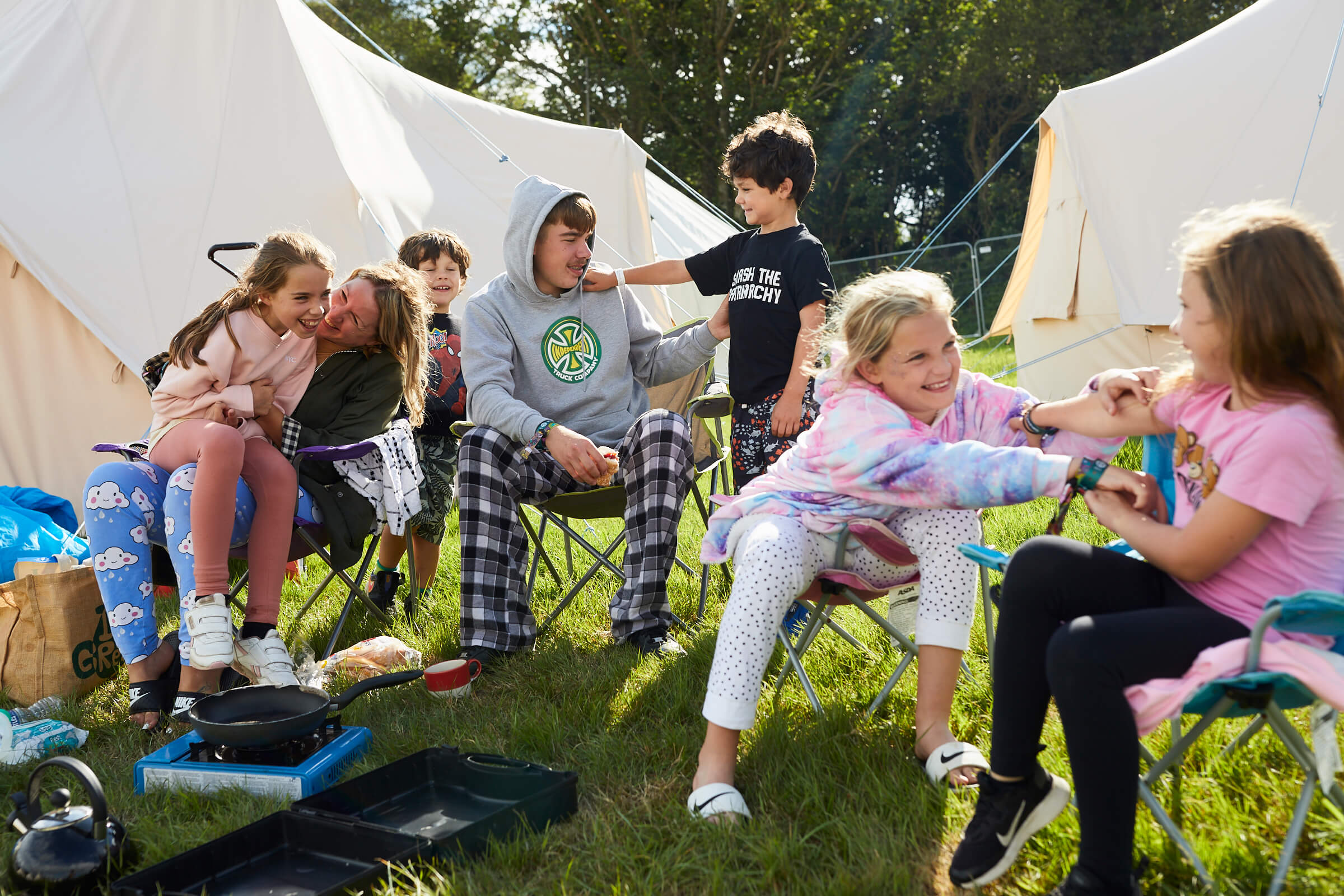
Agree a specific meeting point outside the campsite gate if people are arriving separately. Once all together, walk the campsite together before choosing a pitch — do not send one person to “hold” a spot, it rarely ends well in a large festival. Pitch in a cluster facing inward so tent doors open to a shared central space. Mark the area with something distinctive visible from 50m.
- Arrive early — the best pitches go in the first 3–4 hours after gates open
- Walk 5 minutes from the campsite entrance before pitching — the first section fills with inexperienced campers who pitch immediately at the gate, creating congestion
- Pitch tents in a horseshoe or circle facing inward — creates a shared social space
- A group flag or marker (~£8–£20) on a long pole visible from a distance is the best group campsite identifier
- Drop a pin on Google Maps at your pitch location and share with the group immediately
Group logistics and communication
Quick answer: how do large groups stay together at a festival?
They do not — and that is fine. Agree on the model before the festival: are you a “move together” group or a “free split, reconvene” group? Most festival groups that move together all weekend end up frustrated by compromise. Most groups that agree to split freely and meet at set times have better individual experiences and better group time. Fix two meeting points per day (lunch and evening) and let people move freely between.
- Agree the group model explicitly before arrival — “together always” vs “free agent with fixed meetups”
- Set two fixed group meetups per day — works better than constant group chat coordination
- Agree a physical emergency meet point that does not require phone signal — a named landmark on the festival map
- Walkie talkies (~£20–£40 a pair) — genuinely useful for groups at large festivals where signal is poor
- Designate a “hub person” who stays near camp during the main rush and is the contact point for anyone who gets lost
Shared group kit — split the load
Quick answer: what kit should a group share at a festival?
Split heavy or bulky communal items across the group: camping chairs, a gazebo or shade canopy (if permitted), a large cool box, the cooking kit and gas, and the group first aid kit. Each person still brings their own tent, sleeping kit, and day bag — shared kit is for the campsite area only, not carried into the arena.
- One camping chair per person — see our best festival camping chairs guide
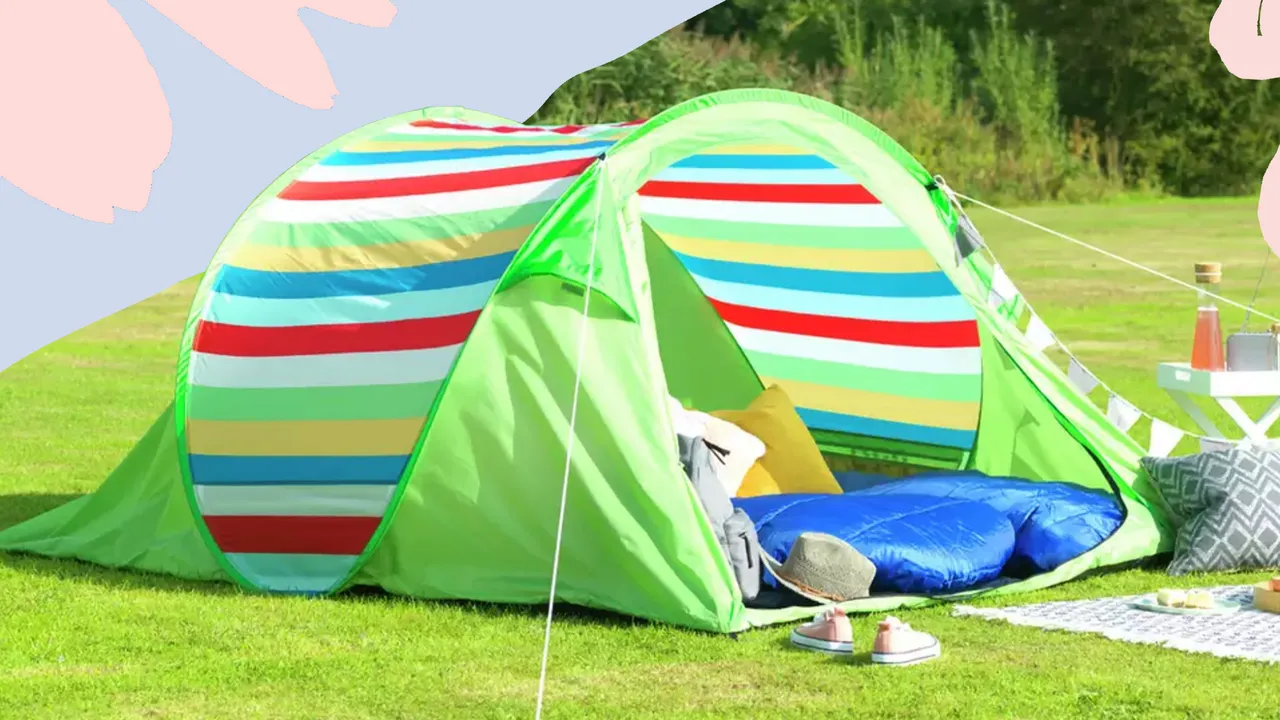
- Shared pop-up gazebo or canopy (~£25–£60) — communal shade and rain shelter for the campsite
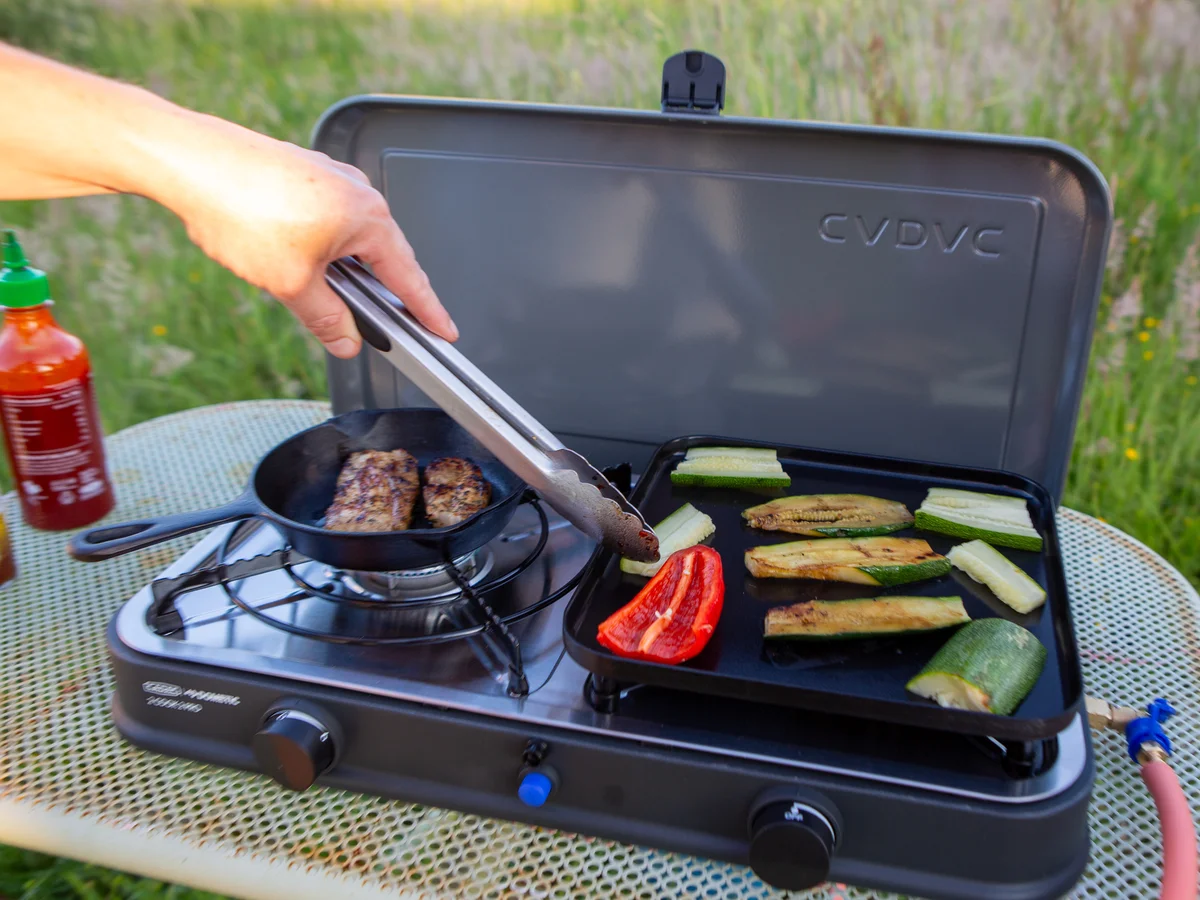
- Shared camping stove and cookware — one stove serves 4–6 people
- Large cool box (~£20–£40) — shared drinks and food refrigeration
- Group first aid kit — one comprehensive kit shared across the group
Managing group dynamics
- The sleep schedule problem — agree before the festival that different sleep times are acceptable. Night owls and early risers coexist in a group; forcing compromise makes both miserable
- The money problem — agree upfront how shared expenses work (split equally, one person pays and is reimbursed, each person pays their own). Settling money mid-festival causes tension
- The schedule problem — the free-split model solves this. Accept that different people want different acts and a group that splits for sets and reconvenes for meals has more fun than a group that compromises on everything
- The lost person problem — agree the physical meet point before departure from camp every session. A pin dropped on the tent location helps but does not replace the backup plan
Related guides
- 🏕️ Festival Camping Tips UK
- 🎒 Ultimate Festival Packing List UK
- 💷 Festival on a Budget UK
- 🎟️ How to Get Festival Tickets UK

Frequently asked questions
How do you stay together as a group at a festival?
You often should not try to — it causes more friction than it is worth. Agree fixed meetup times (lunch and evening) and let people move freely between. Use a physical landmark as the emergency meet point. Walkie talkies help at large festivals with poor signal.
How do you find your tent at a festival with a group?
Mark the group camp with a tall flag visible from 50m. Drop a pin on Google Maps immediately after pitching and share with the group. Agree a landmark near the pitch as the verbal description — not “near the toilets” but “the blue flag next to the big oak tree near the north gate toilets”.
What is the maximum group size for festival camping?
No formal maximum, but groups of over 8 become logistically complex to move and communicate. Large groups work best with a hub model — a designated central meeting point and flexible individual movement — rather than attempting to keep everyone together at all times.
Discover more from The Mosh Manual
Subscribe to get the latest posts sent to your email.