

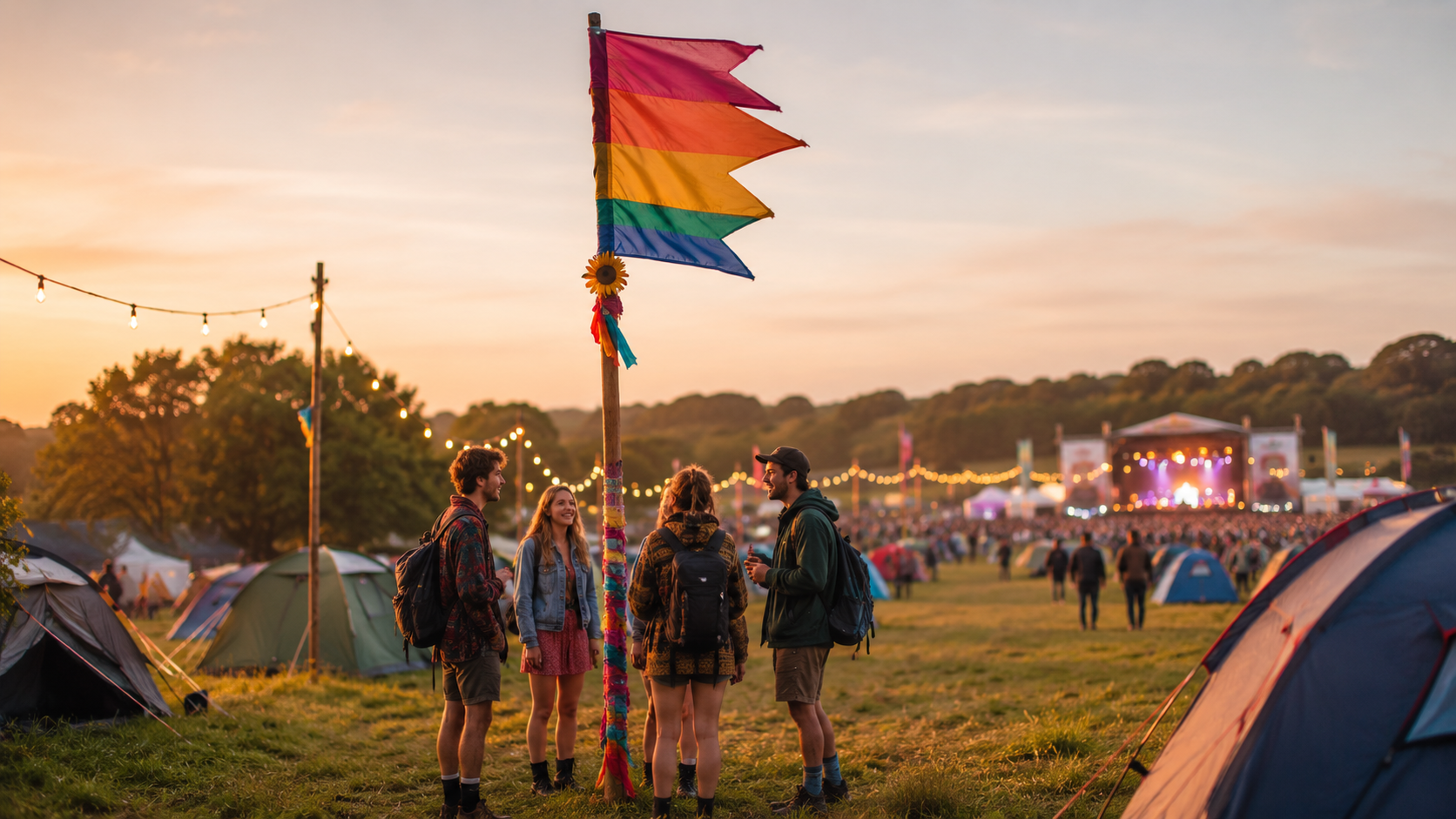
Festival Meeting Points UK 2026: How to Set Up Reunite Spots and Never Lose Your Group
Losing your festival group ranks among the most stressful festival experiences. Phone signal is patchy in crowded fields. Battery dies mid-day. You wandered to a different stage. The pre-agreed ‘just text me’ fell apart at 8pm. Suddenly it’s 11pm at Glastonbury and you have no idea where your 4 friends are, can’t get through on calls, and you’re alone in a field of 80,000 people. The fix is simple: agreed meeting points, agreed times, agreed contingencies. Set these up before the festival, and the entire ‘lost friends’ anxiety disappears. This is the practical guide to UK festival meeting points — how to choose them, how to use them, and how to recover when something goes wrong. Pairs with Festival Clashfinder Strategy UK 2026 and What3words for UK Festivals.
Festival prep, sorted. The free printable Festival Survival Guide PDF — your full pre-festival checklist.
Quick answer: how do I set up festival meeting points?
Pick 3 landmark spots across the festival site — typically the camping pitch, a central area near the mainstage, and one stand-out non-stage location (specific tree, info point, or food van). Agree on hourly meet times — e.g., ‘top of every hour at meeting point B from 6pm onwards’. Use what3words addresses for exact spot locations — 3 words pinpoint to 3m × 3m squares. Write meeting points and phone numbers on paper in your bumbag — phones die. Have a contingency: if lost and can’t reach anyone by 1am, return to the agreed final point and wait. Don’t rely on signal — Glastonbury and Reading have notoriously poor signal during peak times.
Why Meeting Points Matter at UK Festivals
- Phone signal is unreliable. 80,000+ phones competing for cell towers = patchy or zero signal during peak times.
- Battery dies. By 9pm on Day 2, half the festival is on critical battery.
- Crowd density obscures landmarks. ‘I’m at the Other Stage’ isn’t precise enough when there are 30,000 people there.
- Sets overrun and clash. Plans agreed at noon are obsolete by 8pm.
- Drunk decision-making. By night, decisions get made on impulse — you wander, friends wander.
- Solo separation anxiety. Being alone at a festival with no clue where your group is escalates fast for some.
Setting Up Meeting Points Before the Festival
- Get the festival map. Most major festivals publish maps weeks before. Glastonbury’s app, Reading’s app, etc.
- Pick 3 meeting points. Camping pitch + a central festival spot + one alternative.
- Make them distinct. Avoid ‘the bar’ or ‘the food van’ — there are hundreds.
- Use specific landmarks. ‘The big tree near the South Toilets’, ‘the giant whale sculpture’, ‘the info point next to Stage X’.
- Generate what3words addresses for each meeting point. Three-word address = exact 3m × 3m precision.
- Agree time slots. ‘On the hour, every hour from 6pm’ or ‘every 90 minutes from noon’.
- Decide contingency. ‘If totally lost by midnight, return to camping pitch’.
- Write it all down. Paper in everyone’s bumbag.
- Confirm with the group. WhatsApp message with the plan; screenshot the map.
Choosing Good Meeting Points
Camping pitch (the home base)
Your own tent or campsite is the obvious primary meeting point. Pros: known to everyone, has chairs and food. Cons: may be 30+ minute walk from the action.
- Use what3words to mark the exact pitch address. Useful when ‘somewhere in the orange zone’ isn’t enough.
- Tie a marker to the tent. Flag, balloon, colourful flag — visible from a distance.
- Note neighbouring landmarks. ‘Third tent left of the big yellow flag in zone B’ is workable.
Central festival spot
Somewhere people pass through frequently. Pros: easy to swing by; doesn’t require walking back to camp. Cons: choose a specific landmark not a general area.
Good examples by festival type:
- Glastonbury: The big tree at Holy Hill; specific info points; the marketplace area.
- Reading/Leeds: Specific food court name; the festival flag pole; the info point.
- Download: Donington flag; specific bar names; the info point.
- Boomtown: District-specific landmarks (depend on year’s theme).
- Latitude: The Lake; specific art installations.
- Camp Bestival: Castle, lighthouse, specific play area.
Alternative spot (the backup)
If the central spot is too crowded or for any reason unusable. Often near the welfare tent or info point. Knowing two options halves the panic if first plan fails.
💡 The ‘specific tree’ rule
The best festival meeting point at most camping festivals is ‘the specific tree near X’. Trees are visible from a distance, distinctive, and don’t move. Pick a notable one near a landmark. ‘The tree with the swing near the South entrance’ is better than ‘the South entrance’ alone. Take a photo of the tree from where the group will approach; share via WhatsApp before the festival.
Time-Based Meeting Strategies
Hourly check-ins
Simple: meet at the same spot at the top of every hour from 6pm onwards. Pros: regular, predictable. Cons: requires returning to spot every hour, eating into set time.
Sets-based
Meet at named acts: ‘before the Foals set, behind the sound desk at the Other Stage’. Tied to specific schedules from Clashfinder.
Pre-headliner reunite
Group separates during the day; meets at agreed spot 60 minutes before headliner. Works well for a ‘go your own way, regroup for the night’ approach.
Time + place fallback
Combine: ‘If we lose touch, meet at Point A at 10pm; if still not reunited, Point B at 11pm; final fallback is camp by 1am’.
Why what3words is Game-Changing
what3words divides the world into 3m × 3m squares and assigns each a unique 3-word address. For festivals, this is transformative:
- No more ‘somewhere in the orange zone’. Three words = exact 3m square.
- Works without cell signal once loaded. The app works offline if pre-downloaded.
- Easy to share verbally. ‘My tent is at table.chair.lamp’ — easier than typing GPS coordinates.
- Festivals support it. Glastonbury, Reading, Leeds and most major festivals reference what3words in their guidance.
- Medical and security teams use it. Tell them your what3words address; they find you fast.
- How to use it: Download the free app before the festival. Pin your camping pitch, key meeting points. Share addresses via WhatsApp. See what3words for the full breakdown.
Phone Contingencies
Phones fail at festivals. Plan for it:
- Battery management: See How to Charge Phone at Festival for the full strategy.
- Power bank in day bag. 10,000mAh minimum for full-day use.
- Airplane mode in low-signal areas. Saves battery; phone doesn’t hammer for signal.
- Pre-loaded what3words and offline maps. Work without cell signal.
- Paper backup of meeting points. In bumbag, on hand at all times.
- Group phone numbers written on paper. If your phone dies, you can borrow someone’s phone to call.
- Whistles for emergencies. Old-school but works. £2 from any camping shop.
- Lost phone procedure: See Festival Lost Phone Guide UK for what to do if it’s lost entirely.
While you’re sorting kit, grab the free Festival Survival Guide PDF for the full prep list.
Family and Children Meeting Points
Family festivals (Camp Bestival, Latitude, Glastonbury kids fields) need extra precaution:
- Festival wristbands for kids with parent’s phone number. Available at most family festivals.
- Photo of each child taken on Day 1. Shows what they’re wearing for description if lost.
- Detailed pre-departure briefing for older kids. ‘If you’re lost, go to the nearest staff member with a yellow vest.’
- Lost children point. Every UK festival has one near the info point/medical tent. Familiarise kids with it.
- Don’t let kids run ahead. Even confident 10-year-olds get lost; stay together.
- Reunite point for older kids. If kids have phones, set them with the same meeting points strategy as adults.
Common Meeting Point Mistakes
- Choosing a non-distinctive landmark. ‘Near the bar’ — there are 30 bars at most festivals.
- Only one meeting point. Always have an alternative.
- No time agreed. ‘Just meet up later’ doesn’t work.
- Forgetting the meeting point exists when separated. ‘I’ll just walk around looking’ — recipe for hours of wandering.
- Not using what3words. Free app; transforms communication when signal is bad.
- Group of 6+ with no point-person. Designate one person as ‘group coordinator’ for the day.
- Changes mid-festival not communicated. Plan adjusted without consulting the whole group.
- Phone-only plans. Battery and signal failures break this.
- No fallback for end-of-night. ‘Camp by 1am’ is essential.
Festival-Specific Meeting Point Notes
| Festival | Specific meeting point considerations |
|---|---|
| Glastonbury | Site is huge; 30+ minute walks possible. Use what3words. Camp + 2 central points + alternative. |
| Reading / Leeds | Smaller; can default to ‘near the info point at hourly times’. Phone signal is better than Glastonbury. |
| Download | Tight site; meeting points work easily. Use Donington flag or info point. |
| Boomtown | Multi-district vertical site. Use district-specific landmarks; what3words is essential. |
| Latitude | Smaller foodie festival; lake landmarks work well. |
| Camp Bestival | Family festival; castle + lighthouse are obvious. Kids-specific meeting points crucial. |
| Green Man | Small festival; landmarks easy to find. Less need for elaborate plans. |
| Boardmasters | Coastal; beach area + main stage as defaults. |
Frequently Asked Questions
How do I find my friends at a festival without phone signal?
Use pre-agreed meeting points at agreed times. Top of every hour at a specific landmark works. Use what3words for exact location sharing (works without cell signal if pre-loaded). Carry paper with meeting points and phone numbers as fallback when battery dies.
What’s a good meeting point at a UK festival?
Specific landmarks visible from a distance: a distinctive tree, info point, flag pole, art installation, or marked structure. Avoid ‘the bar’ or ‘a food van’ — there are dozens. Use the festival map to identify 2-3 specific named landmarks across the site as primary, secondary, and tertiary meeting points.
How does what3words work for festivals?
what3words divides the world into 3m × 3m squares, each with a unique 3-word address. Download the free app before the festival. Pin your camping pitch and key meeting points. Share addresses verbally or via WhatsApp (‘my tent is at table.chair.lamp’). Festivals like Glastonbury reference what3words in their guidance.
How often should we meet up as a group at a festival?
Every 1-2 hours during set-watching times works for most groups. Tighter (every hour) for first-timers or anxious group members; looser (every 2-3 hours) for experienced groups. Always meet 60-90 minutes before headliners for the evening regroup.
What if my phone dies and I can’t find my group?
Return to the agreed primary meeting point and wait 30-60 minutes. If still not reunited, go to camping pitch. As ultimate fallback, go to the welfare or info point — they have ways to reunite groups, including PA announcements at some festivals. Always carry written phone numbers.
Can I borrow a stranger’s phone at a festival?
Yes — most festival-goers will let you make one quick call to your group or family. Approach calmly: ‘Sorry, my phone’s dead and I can’t find my friends — can I just make a quick call?’ Most will lend you their phone for 1 minute. The festival community is generally helpful.
Should our group split up at a festival?
Most groups split for daytime sets (different tastes) and reunite for evening headliners. Splitting works if you have agreed meeting points and times. Don’t split if any group member is anxious about being alone, drunk, or unfamiliar with the site. Solo festival-going is also a valid choice.
What’s the lost-friend procedure if signal is down at Glastonbury?
Return to pre-agreed meeting point at the next agreed time. If multiple meet points pass without finding them, return to camping pitch and wait. If significantly worried (someone alone, hurt, intoxicated), go to the nearest welfare or info point. Festival staff have PA systems and procedures for lost group members.
How do I prevent losing kids at a festival?
Festival wristbands with parent’s phone number written on them (available at most family festivals). Photo of each child on Day 1 morning showing what they’re wearing. Brief older kids on what to do if lost (‘go to the nearest staff member with a yellow vest’). Don’t let kids run ahead even at relaxed family festivals.
Are meeting points really needed for smaller festivals?
Less critical for festivals under 5,000 capacity (Green Man, End of the Road) where you’ll randomly bump into friends. Still useful for evening headliners and end-of-night reunion. For festivals over 20,000 capacity (most major UK festivals), meeting points are essential to avoid hours of wandering.
Related Reading
- Festival Clashfinder Strategy UK 2026
- What3words for UK Festivals
- Festival Lost Phone Guide UK
- How to Charge Phone at a Festival
- Solo Festival Tips UK
Meeting points are one piece of festival logistics. Full system in the UK Festival Survival Guide.
Disclosure: This post contains affiliate links. If you buy through them, I may earn a commission at no extra cost to you. I only recommend gear and brands I would actually use at a UK festival.
Discover more from The Mosh Manual
Subscribe to get the latest posts sent to your email.