
Festival with Teenagers UK 2026: First-Festival Survival Guide for Parents and Teens
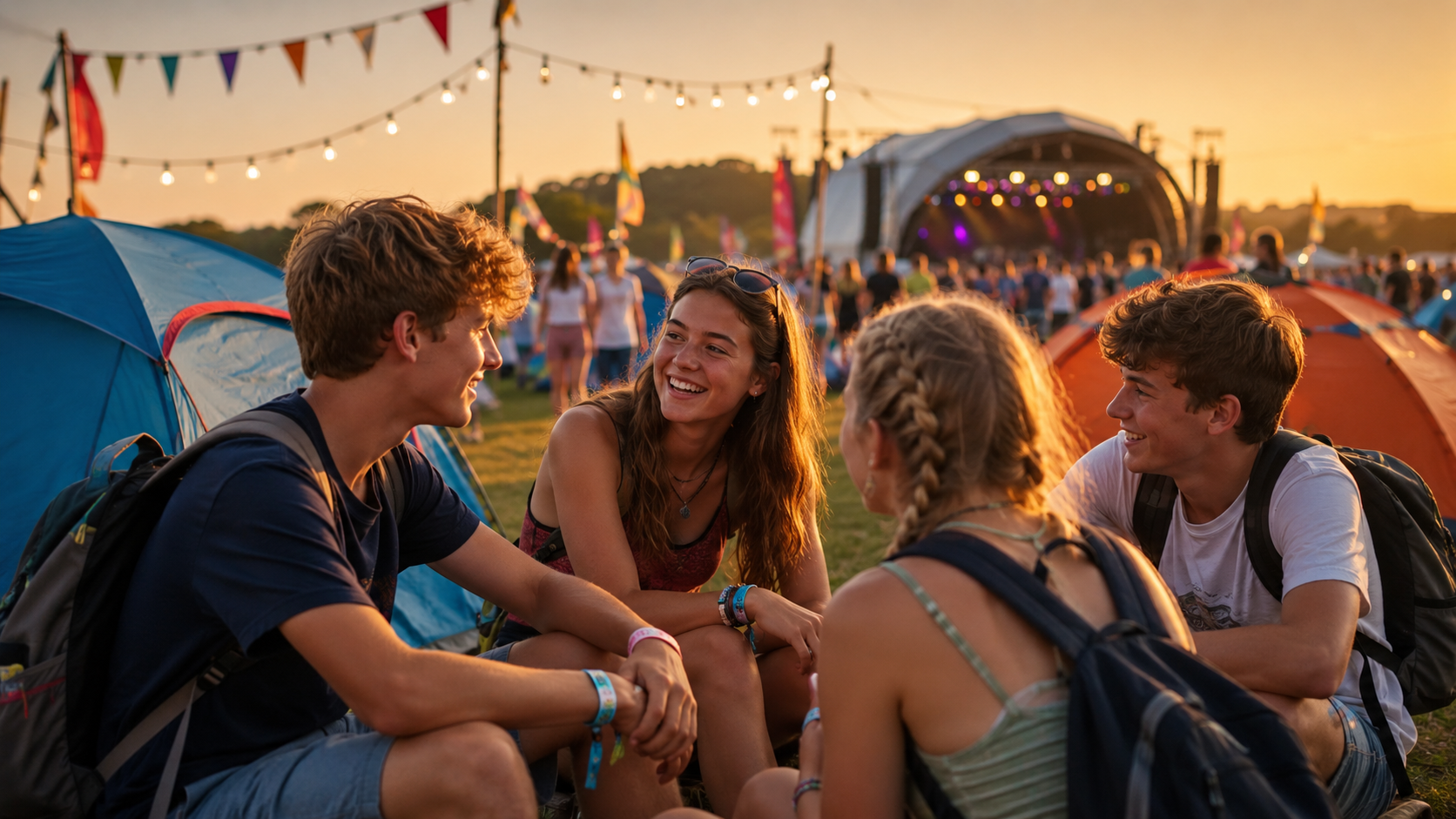
The festival-with-teenagers conversation is one of the more nerve-wracking parenting moments. Teenagers aren’t kids; they want autonomy. They’re also not adults; they need structure, safety nets and someone to call when phone signal dies. Some teens go with parents; some go solo or with friends from 15-16 onwards (Reading and Leeds famously skew young). Either way, the right preparation transforms a potentially fraught experience into one of the formative weekends of their life. This is the practical guide to UK festivals with teenagers — ground rules, kit, festival selection, safety protocols, and the realistic conversations to have before they go. Pairs with Festival with Kids UK 2026 and Best UK Festivals for Families.
Festival prep, sorted. The free printable Festival Survival Guide PDF — your full pre-festival checklist.
Quick answer: what age can teenagers go to UK festivals?
With parents: Any age, though most family festivals work best for 6-14 year olds. Solo or with friends: Most major UK festivals require under-16s to be accompanied by an adult; from 16+ they can attend independently with parental consent for some. Reading and Leeds: 13+ with parent/guardian accompaniment; 16+ unaccompanied with parental consent form. Glastonbury: Under 13s free with adult; 13-15 standard ticket + adult; 16+ standard adult ticket. Best festivals for first-time teens: Latitude, Camp Bestival, Y Not, Bluedot, Kendal Calling — calmer crowds and good safety infrastructure. Ground rules first: meeting points, phone check-ins, no-go zones, emergency plan.
Festival Age Policies for Teenagers (2026)
| Festival | Under 13 | 13-15 | 16-17 | 18+ |
|---|---|---|---|---|
| Glastonbury | Free with adult | Standard ticket + adult | Standard adult ticket, can be unaccompanied with consent | Standard |
| Reading | Not permitted | With parent/guardian only | Unaccompanied with parental consent form | Standard |
| Leeds | Not permitted | With parent/guardian only | Unaccompanied with parental consent form | Standard |
| Download | Not permitted in arena; teen camping with adult | With adult only | Unaccompanied with consent | Standard |
| Latitude | Family-friendly throughout | With adult OK | With adult only typically | Standard |
| Camp Bestival | Family festival — designed for it | With adult | With adult | Standard |
| Boomtown | Not recommended | With adult only | With adult only | Standard |
| Wireless / Parklife | Not permitted | With adult only | With adult only | Standard |
| Boardmasters | With adult | With adult | With adult typically | Standard |
| Kendal Calling | With adult | With adult | With adult | Standard |
Always check the specific festival’s policy. These change between years; consent forms specifically for unaccompanied teens need to be downloaded from the festival website and signed in advance.
Best UK Festivals for Teenagers
For first-time teens (13-15 with parents)
- Latitude. Calm crowds, good range of teen-friendly stages (comedy, theatre, dance music), excellent welfare infrastructure.
- Camp Bestival. Family festival designed for kids 0-15. Kept getting better for early-teens specifically.
- Bluedot. Science + music festival; appeals to teens with technical/intellectual interests.
- Y Not Festival. Indie/rock smaller festival; teens find their crowd easier.
- Kendal Calling. Lake District location; mixed crowd; smaller size = easier supervision.
- Bluedot. Scientific theme draws curious teens.
- End of the Road. Smaller, calmer, lots of comedy and theatre.
For independent older teens (16-17)
- Reading or Leeds. Historic rite of passage for UK teens. Strong welfare and security infrastructure. Specific ‘parental consent’ systems for unaccompanied 16-17 year olds.
- Boardmasters. Surf + music; younger demographic. Good for first solo festival.
- Slam Dunk. One-day festival; less commitment.
- 2000 Trees. Smaller alternative festival; manageable for first solo.
- Lovebox / Wireless. Urban day festivals; teens get home each night.
Avoid for first-festival teens
- Boomtown. 24-hour party culture, strong drug presence, intense for first-timers.
- Creamfields. Dance music focus, harder to supervise.
- Download. Mosh pits, heavy metal culture — only if the teen specifically wants this.
- Glastonbury (first solo). Huge site, easy to get lost, overwhelming for unprepared first-timers. Better with parents first.
💡 The Reading/Leeds rite of passage
Reading and Leeds have built specific infrastructure for 16-17 year olds attending without parents. Parental consent forms, dedicated teen camping areas, strong welfare presence, and good security mean it’s one of the safer ‘first solo festival’ options for UK teens. Around 30% of attendees each year are 16-17. Many parents look back and remember their own first Reading/Leeds; the tradition is real.
Ground Rules for Teens Attending With Parents
- Set meeting points and times before arrival. ‘I’ll text you’ fails when signal dies. See Festival Meeting Points UK.
- Phone check-ins. Pre-agreed hours where the teen calls or texts. Daily; teens get autonomy outside check-in times.
- No-go zones. Specify which areas are off-limits without parents. Late-night dance tents, alcohol-heavy areas, etc.
- Headliner reunite. Group together for the day’s headliner; split during afternoons.
- Emergency protocol. If lost, return to camp. If injured, welfare tent. If problem, parent’s phone first.
- Alcohol/substance conversation. Open conversation about what they’ll encounter; harm-reduction approach better than zero-tolerance.
- Money. Cash + cashless wristband. Daily budget agreement.
- Tent location. Camp together; teen-only camping mid-festival has supervision issues.
Ground Rules for Unaccompanied 16-17s
- Parental consent form completed in advance. Required by Reading, Leeds, and most major festivals for under-18s. Downloaded from festival website.
- Daily phone check-in agreed with parent. Specific time each day; if missed, parents have a protocol to follow.
- Group of at least 3 friends. Solo teen attendance is risky; group attendance dramatically reduces risk.
- One responsible adult contact who can drive to festival if needed. Aunt, older sibling, parent ready to come if things go wrong.
- Specific accommodation. Camp address shared with parents using what3words.
- Money in two separate forms. Phone-wallet + physical cash; phone can die.
- Insurance. Travel insurance for theft/loss + medical.
- Safety briefing pre-festival. Welfare tent, medical tent, security, harm reduction — teens know what each is and where to find them.
Conversations Parents Should Have Pre-Festival
Substance awareness
Don’t pretend it won’t be there. Drug culture exists at UK festivals; teens will see it. Open conversation reduces risk. Resources: The Loop (drug-testing service at many UK festivals), Festival Safe. See Festival Drug Safety UK 2026 for the realistic breakdown.
Key messages: never take anything offered by strangers; if friends take something, don’t leave them alone; know what welfare and medical look like and use them without fear of getting in trouble.
Alcohol
UK festival on-site bars require ID; underage festival-goers can’t legally buy alcohol. That doesn’t stop teens drinking. Open conversation:
- Pace yourself; don’t try to keep up with older festival-goers
- Eat before drinking
- Stay with friends; don’t accept drinks from strangers
- Water between drinks (1:1 ratio prevents 80% of hangovers)
- Know the signs of dangerous intoxication — friend not waking up, vomit + unconscious, breathing difficulty = medical immediately
Welfare not punishment
Welfare and medical tents at UK festivals are explicitly safe spaces — they don’t tell parents, school or police. Tell your teen: ‘If anything happens, go to welfare. I won’t be angry; I’d rather you go than try to handle it alone.’
Boundaries vs autonomy
Teens push back against rules. Frame conversations as collaboration: ‘Here’s what I’m worried about. What would help me worry less?’ Often the teens propose more conservative rules than parents would have imposed.
Kit for Festival Teens
In addition to standard festival kit (see Festival Packing List UK):
- Power bank (10,000mAh minimum). Teens use phones more; battery anxiety is real.
- Spare cable. Charging cables get lost; bring 2.
- Earplugs. Permanent hearing damage is real and accumulates from teens onwards.
- SPF 30+ sunscreen. Teens forget; pack and remind.
- Cash + cashless wristband. Both for redundancy.
- Pre-paid food card. Some festivals offer this; alternative to giving teens £200+ in cash.
- ID (driver provisional or passport copy). Some venues require for under-18s.
- Welfare tent location card. In bumbag, printed.
- Parent phone numbers on paper. Backup for dead phone.
- Bumbag/crossbody bag (worn at front). Pickpocketing risk.
While you’re sorting kit, grab the free Festival Survival Guide PDF for the full prep list.
Safety Infrastructure Teens Should Know
Welfare tent
Free, confidential, supportive. Trained volunteers handle anxiety, panic, substance issues, distress, lost group members. Won’t tell parents (unless safeguarding issue). See Festival Anxiety in Crowds UK for the full breakdown.
Medical tent
On-site medical professionals handle injuries, illness, severe intoxication, panic attacks. NHS 999 for genuine emergencies. Festival medical staff are trained to support without judgment.
Security and stewards
Yellow vests; visible at all major festivals. First port of call for safety issues, lost teens, harassment incidents.
The Loop / drug testing
Anonymous drug testing service at many UK festivals (Boomtown, Latitude, Parklife, others). Teens can test substances anonymously before taking; results given without judgment. Confidential.
Lost teens point
Every major UK festival has a dedicated ‘lost teens’ or ‘lost child’ point near the info point. Make sure teens know it exists.
Common Mistakes
- Zero-tolerance pre-festival lectures. Teens stop listening; reduce their willingness to come to you if something goes wrong.
- Not setting clear meeting points. Phone failure = lost teen anxiety spiral.
- Assuming the festival is safe by default. It’s reasonably safe with the infrastructure, but teens need to know how to use it.
- Over-supervision. Teens need some autonomy; constant parental presence ruins their experience.
- Under-supervision for 13-15s. They’re not 18; they need check-ins.
- Skipping the substance conversation. If they don’t talk to you, they’ll get info from sketchier sources.
- Choosing a too-intense first festival. Boomtown or Glastonbury as ‘first festival’ for 13-year-olds is rough.
- Not testing the parental consent form. Submit early; some festivals have processing delays.
First-Festival Teen Checklist
- Festival appropriate for age and personality chosen.
- Ticket purchased; parental consent form (if applicable) completed.
- Phone check-in schedule agreed.
- Meeting points and times set.
- Welfare/medical/security locations identified on festival map.
- Substance awareness conversation had.
- Alcohol conversation had.
- Emergency contact (driveable adult) confirmed.
- Kit packed including power bank, sunscreen, cash + wristband.
- ID/passport copy in bumbag.
- Camp location pinned in what3words.
- Insurance considered.
- Realistic expectations set about what they will and won’t see.
Frequently Asked Questions
What age can my teenager go to a UK festival alone?
Most major UK festivals require under-16s to be accompanied. From 16+ they can attend unaccompanied at Reading, Leeds, Boardmasters and many others, with a parental consent form. From 18+ standard adult attendance. Some festivals have higher minimums; always check the specific festival’s policy.
What’s the best UK festival for first-time teenagers?
Latitude, Camp Bestival, Bluedot, Kendal Calling, and Y Not are excellent for first-time festival teens with parents. Reading and Leeds are the classic ‘first solo festival’ options for 16-17 year olds. Avoid Boomtown, Creamfields, or Download for first-time teens unless they specifically want those scenes.
Do I need a parental consent form for my teen at a festival?
Yes for unaccompanied 16-17 year olds at most major UK festivals (Reading, Leeds, Boardmasters, others). Form available from festival website; needs to be signed by parent/guardian and submitted in advance. Some festivals require an additional admin fee.
Should I have a substance conversation with my festival-going teen?
Yes. Drug culture exists at UK festivals; pretending it doesn’t reduces your teen’s openness with you. Use harm-reduction language: ‘I don’t want you to do drugs, but if you do, here’s what would keep you safer.’ Reference services like The Loop (anonymous drug testing) and welfare tents. Your goal is keeping them safe, not winning the argument.
Can my teenager drink at a festival?
On-site bars at all UK festivals require ID; underage drinkers can’t legally buy from bars. Most teens drink anyway, brought by older friends or bought before the festival. Have the conversation: pace yourself, eat first, water between drinks, never accept drinks from strangers, know the signs of dangerous intoxication.
What if my teen gets lost or has an emergency at a festival?
Pre-agreed meeting points and times prevent most lost-teen situations. For genuine emergencies, festival welfare and medical tents are confidential and supportive. Teens can also approach yellow-vested stewards. Make sure your teen knows: welfare is a safe space, not a punishment.
What kit should a festival-going teenager have?
Power bank (10,000mAh+), spare charging cable, earplugs (Loop Quiet 2 are excellent), SPF 30+ sunscreen, cash + cashless wristband, ID/passport copy, welfare location card, parent phone numbers on paper, bumbag worn at front. Plus standard festival kit (tent, sleeping bag, wellies, etc.).
Are Reading and Leeds safe for 16-17 year olds?
Yes, with proper preparation. Both festivals have specific infrastructure for unaccompanied 16-17 year olds: parental consent forms, dedicated teen-friendly camping areas, strong welfare and security presence. Around 30% of attendees each year are 16-17. With basic preparation (group of friends, check-ins, ground rules), it’s a reasonable first solo festival.
Should my under-18 teen camp separately from us at a family festival?
Generally no for 13-15. They’d usually camp adjacent or in the same pitch. For 16-17 some family festivals allow separate teen camping zones; check the specific festival policy. Camping together is safer and easier for check-ins; teens get autonomy through daytime independence rather than separate sleeping arrangements.
What festivals should I avoid for my teenager’s first festival?
Boomtown (24-hour party culture, strong substance presence), Creamfields (dance focus, limited supervision), Download (mosh pits, heavy metal culture — unless the teen specifically wants this), and Glastonbury as a first solo festival (huge site, overwhelming for unprepared teens). Better first festivals: Latitude, Camp Bestival, Kendal Calling, Bluedot.
Related Reading
- Festival with Kids UK 2026
- Best UK Festivals for Families
- Festival Drug Safety UK 2026
- Festival Meeting Points UK
- Festival Anxiety in Crowds UK
Teenager preparation is one piece of family festival planning. Full system in the UK Festival Survival Guide.
Disclosure: This post contains affiliate links. If you buy through them, I may earn a commission at no extra cost to you. I only recommend gear and brands I would actually use at a UK festival.
Discover more from The Mosh Manual
Subscribe to get the latest posts sent to your email.