
Festival Anxiety in Crowds UK 2026: How to Manage Panic, Overwhelm and Social Anxiety
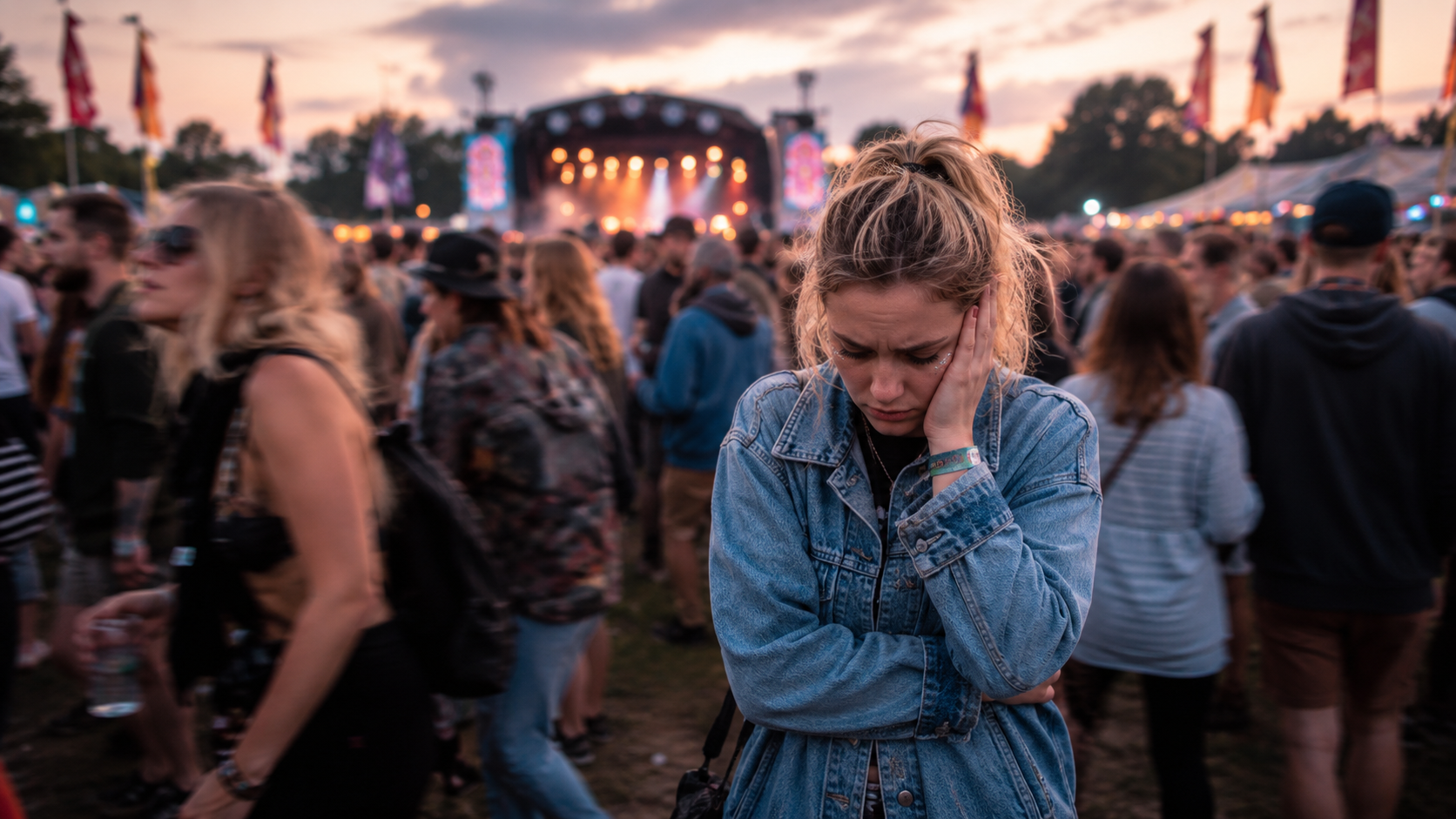
Festival anxiety is real and common. Crowds of 80,000 people. Persistent noise. Sleep deprivation. Sensory overload from lights, smells, music and movement. Even confident festivalgoers can experience panic, overwhelm or social anxiety mid-festival. For people with diagnosed anxiety disorders, these conditions can trigger genuine episodes. And yet festivals are also some of the most welcoming spaces in British culture — with welfare tents, harm-reduction crews and quiet zones. The infrastructure exists; you just need to know how to use it. This is the practical guide to managing crowd anxiety at UK festivals — pre-festival prep, in-the-moment techniques, and the support systems that exist on every major site. Pairs with Festival Mental Prep UK 2026 and Solo Festival Tips UK.
Festival prep, sorted. The free printable Festival Survival Guide PDF — your full pre-festival checklist.
Quick answer: how do I manage anxiety at a UK festival?
Plan an exit route from any crowded space before you enter — knowing you can leave reduces anxiety even if you don’t. Watch from the edges rather than the centre of crowds; back-of-crowd is fine for almost all sets. Use the welfare tent if you need it — every major UK festival has one. It’s free, confidential, and supportive. Bring a sensory toolkit: earplugs (Loop Quiet 2 are excellent), sunglasses, a calming scent (lavender oil), comfortable layers. Have an anxiety plan with your group — agreed meet points, code words for ‘I need to leave’, and someone trusted to walk you out. If on medication, bring it — never skip prescribed anxiety medication at a festival. Avoid stimulants if anxiety-prone — see Festival Energy Without Stimulants.
Why Festivals Trigger Anxiety
The specific anxiety triggers at UK festivals:
- Crowd density. Personal space drops below comfortable levels at headline sets. Triggers social and physical anxiety.
- Sensory load. Loud music, flashing lights, food smells, body heat — sensory overload is real.
- Sleep deprivation. Reduces emotional regulation, increases anxiety baseline.
- Substance use around you. Even if not personally using, witnessing intoxication can be anxiety-triggering.
- Distance from safety. Far from home, far from car, far from quiet — escape feels difficult.
- Decision fatigue. Endless choices (which set? which food? where to camp?) deplete cognitive resources.
- Social pressure. Feeling like you should be having more fun than you are.
- Existing anxiety conditions. Generalised anxiety, social anxiety, panic disorder all amplify in festival conditions.
Pre-Festival Preparation
Mental preparation
- Map the site in advance. Most major festivals publish maps. Know where welfare, medical, quiet zones, and exits are.
- Identify your safe spaces. Glastonbury has Healing Fields. Boomtown has multiple chill-out zones. Most family festivals have low-stimulation areas. Find yours before you need it.
- Plan your sets realistically. Don’t commit to front-pit positions for every headliner. Mix front-of-crowd with back-of-crowd. See the broader plan in Festival Mental Prep UK 2026.
- Talk to your group. Tell trusted friends about your anxiety history. Agree code words for ‘I need to leave’ that don’t require explanation.
- Bring trusted medication. If you’re on prescribed anxiety medication, bring enough for the full festival + 2 days buffer. Keep in original packaging.
- Consider taking a benzo-with-prescription with you if your GP has prescribed for emergencies. Don’t take recreationally; do take if you need it.
Physical preparation
- Sleep well in the week before. Start the festival rested. Sleep debt amplifies anxiety.
- Cut caffeine 5 days before. Especially if caffeine triggers your anxiety. Festival is a bad time to discover sensitivity.
- Reduce alcohol intake the week before. Alcohol withdrawal can trigger anxiety; reducing slowly stabilises this.
- Magnesium loading. 200-400mg daily for 7-10 days before the festival (Lily & Loaf magnesium). Magnesium supports calmness and sleep.
- Practice grounding techniques. 5-4-3-2-1 sensory technique, box breathing — practice at home so they’re automatic when you need them.
The Sensory Toolkit
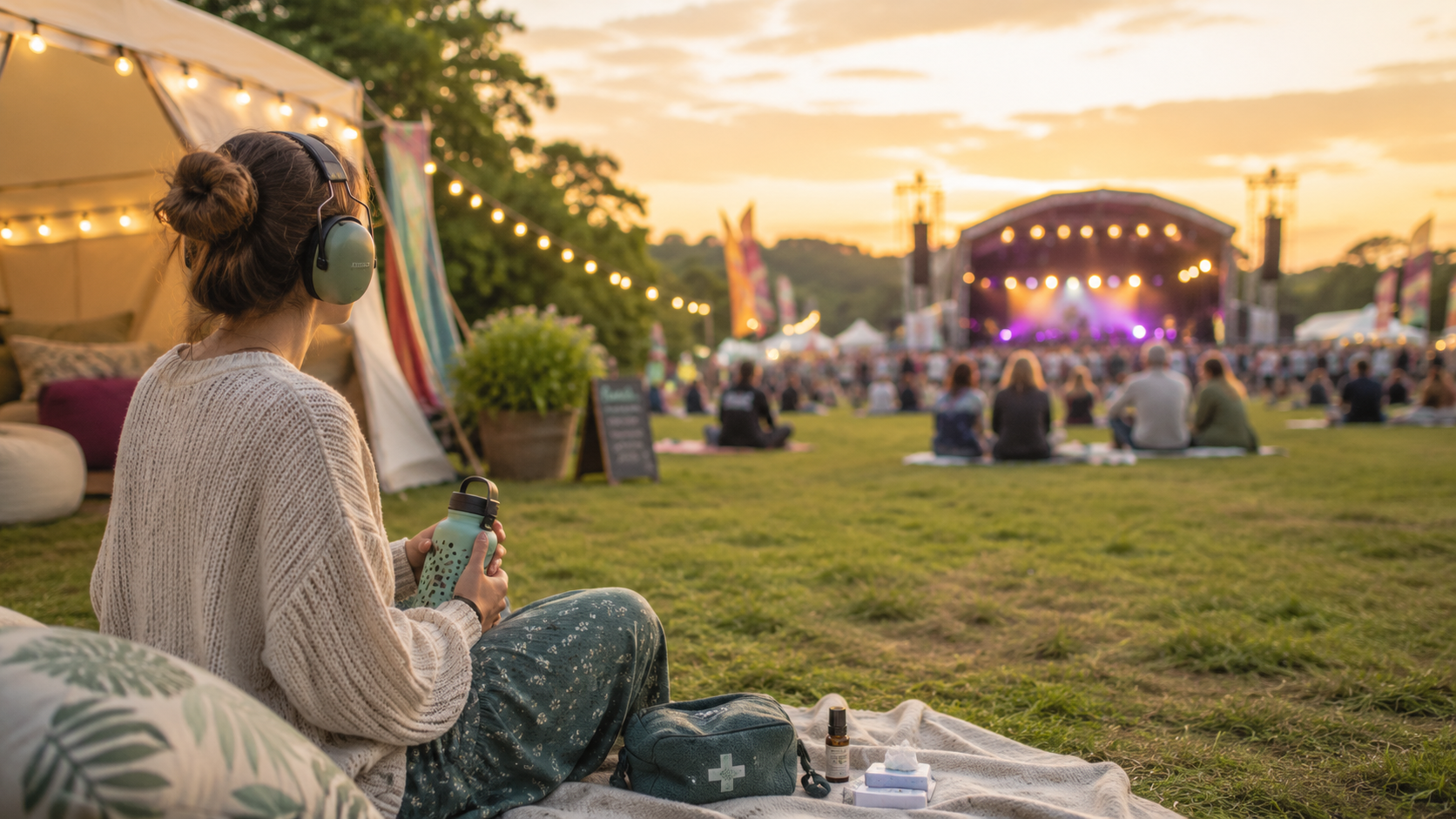
Things to carry in your day bag specifically for anxiety management:
- Loop Quiet 2 earplugs. Loop Quiet 2 (£20-£25) — reduces noise by 27dB without muffling. Game-changing for sensory overwhelm.
- Sunglasses with UV protection. Polarised sunglasses — reduce visual stimulation.
- A calming scent. Lavender essential oil roll-on (£5-£10) or lavender hand cream. Familiar smells regulate nervous system.
- Hand-held grounding object. A worry stone, fidget cube, or anything small and tactile. Fidget cube (£5-£10).
- Comfortable layers. Long-sleeved top for the ‘pressure’ of clothing on skin in distressing moments.
- Water bottle (always full). Sipping water grounds you in the present moment.
- Sugar-free chewing gum. Physical chewing motion reduces tension.
- Your phone with a calming playlist or app. Calm, Headspace, or a known-soothing music playlist ready to go.
💡 The earplugs paradox
Many people think wearing earplugs at a music festival defeats the purpose. The opposite is true: earplugs reduce the cumulative noise stress without blocking music. You can still hear the band; you just don’t get the cortisol response from the sustained sound pressure. Most regulars wear earplugs through entire sets without losing any of the music experience. Anxiety-prone festivalgoers benefit most.
In-the-Moment Techniques
Box breathing
The single most effective in-the-moment anxiety technique. Inhale 4 counts, hold 4 counts, exhale 4 counts, hold 4 counts. Repeat 4-8 cycles. Activates the parasympathetic nervous system. Works in dense crowds because no one notices you doing it.
5-4-3-2-1 grounding
Identify: 5 things you can see, 4 things you can touch, 3 things you can hear, 2 things you can smell, 1 thing you can taste. Forces attention out of anxious thoughts and into sensory present. Works particularly well for crowd dissociation.
Cold water
Splash cold water on your face, or hold an ice pack from a cool bag to your wrists. Triggers the mammalian dive reflex which calms the nervous system. Works fast. Useful for impending panic attacks.
Active grounding via touch
Press feet firmly into the ground. Notice each toe. Focus on the physical sensation of contact with earth. Particularly useful when feeling dissociated or ‘floaty’ in a crowd.
Movement
If you can leave the crowd, walking 5-10 minutes (especially in cooler air) physically dissipates anxiety. If you can’t leave, even small movement — swaying, shifting weight, stretching shoulders — helps.
Using Festival Welfare and Medical Services
Every major UK festival has welfare services. They are:
- Free. Always.
- Confidential. Won’t kick you off site, won’t tell your friends, won’t tell police (unless safeguarding issue).
- Supportive. Trained volunteers and staff who deal with anxiety, panic, distress, substance issues, and crisis.
- Welcoming. No judgement. They’ve seen everything.
- Open 24 hours. Including nights.
What you can use welfare for:
- Talking through anxiety. Just sitting and chatting with a calm volunteer.
- Quiet space to recover. Welfare tents typically have a quieter area.
- Help reuniting with friends. If separated and feeling overwhelmed.
- Substance support. If something hits you harder than expected, including alcohol.
- Onwards referral. If you need medical attention or specialist help, they’ll arrange it.
- Just resting. Welfare is fine with you sitting quietly for an hour.
Notable services: Glastonbury’s welfare is widely respected. Boomtown has dedicated ‘Drug Welfare’ tents from harm-reduction organisations. Festival Safe and The Loop run drug-testing services at many UK festivals. Don’t be afraid to use them. While you’re sorting kit, grab the free Festival Survival Guide PDF for the full prep list.
Group Strategies for Anxiety-Prone Festivalgoers
- Designated ‘anxiety buddy’. One person in your group who knows about your anxiety and will leave a set with you without questioning.
- Pre-agreed code words. ‘I need a tea’ or ‘Going for a wee’ as signals for ‘I need to leave the crowd right now’.
- Meet points and timing. Set 4-hour meet-back times at a specific landmark. Reduces ‘lost in crowd’ anxiety.
- Phone numbers written on paper. Phone batteries die. Have key numbers on paper in your bumbag.
- what3words addresses for camp and meeting points. Easy to share, hard to lose.
- Don’t always go to the same sets. Reduces pressure to keep up; gives you a ‘I want a quieter set tonight’ option.
- Tell your group what triggers you. Crowd density, specific times, mosh pits — whatever applies.
Specific Anxiety Situations
Panic attack in a crowd
Symptoms: heart racing, chest tight, can’t breathe properly, feeling of impending doom, dizziness, sweating. Steps:
- Tell your group: ‘I’m having a panic attack. I need to leave now.’ Don’t suffer silently.
- Leave the crowd. Move to the edges, then to a quieter area.
- Box breathe. Force a slow exhale; it’s slower exhales that calm the system.
- Get to welfare or a quiet zone. 5-10 minutes of quiet recovery time.
- Don’t rush back. Take 30+ minutes. Re-enter the festival at your own pace.
- If panic attacks recur. Spend the rest of the day at lower-stimulation areas. Don’t push through.
Social anxiety with group
Feeling like you can’t keep up, are being judged, or want to retreat from group dynamics.
- Tell someone trusted. Even just ‘I need 30 minutes alone’.
- Take a solo walk. 30 minutes alone in less-busy areas of the festival.
- Don’t drink to mask it. Alcohol amplifies social anxiety the day after.
- Plan small-group sets. Smaller venues are less anxiety-inducing than headline mainstage.
Sensory overwhelm
Feeling ‘too much’ from lights, noise, smells, body contact.
- Loop Quiet 2 in. Immediate noise reduction.
- Sunglasses on. Visual reduction.
- Move to lower-density area. Back of crowd or chill-out zone.
- Cool water on face/wrists. Resets nervous system.
- 5-10 minutes recovery. Then decide whether to continue or return to tent.
Medications and Mental Health at Festivals
- SSRIs/SNRIs (antidepressants). Don’t stop suddenly. Bring full festival supply + buffer. Keep taking at usual time daily.
- Benzodiazepines (Diazepam, Lorazepam). If prescribed, bring; don’t share or buy informally on-site. Some can cause respiratory issues with alcohol.
- Beta blockers (Propranolol). Often used off-label for performance/social anxiety. Bring as prescribed.
- Mood stabilisers (Lithium, Lamotrigine). Don’t miss doses. Sleep disruption can destabilise; prioritise sleep.
- Antipsychotics. Stimulants and alcohol can interact badly; festival may not be advisable in active illness — speak to your psychiatrist.
- ADHD medications. If on prescribed stimulants, do not add additional stimulants. Watch hydration carefully.
Don’t self-medicate with alcohol or unprescribed substances. If you usually manage anxiety with prescribed medication, that’s the medication to keep using. Festivals are not the place to experiment with new substances if anxiety-prone.
When to Skip a Set (or the Festival)
It’s OK to skip headline sets. It’s OK to leave a festival early. Signs that the day or weekend isn’t worth pushing through:
- Multiple panic attacks in 24 hours
- Persistent thoughts of self-harm or distress
- Insomnia for 2+ consecutive nights
- Increasing dread about each day rather than excitement
- Inability to eat or drink normally
- Substance use creeping up beyond your normal pattern
If any of these apply, the question isn’t ‘how do I push through?’ but ‘how do I look after myself?’. Welfare can help. Going home a day early is fine. Festival tickets are not refundable in this case but your mental health is more valuable than a single weekend’s entertainment.
Frequently Asked Questions
Is anxiety common at UK festivals?
Yes, especially among first-timers and people with existing anxiety conditions. Even experienced festivalgoers can have anxiety episodes due to sleep deprivation, sensory load and crowd density. Most major UK festivals have dedicated welfare services because anxiety and panic episodes are common enough to need specific support infrastructure.
Should I tell my friends I have anxiety before going to a festival?
Yes, ideally a trusted few. Festival anxiety often gets worse when you’re trying to hide it. Telling friends what triggers you, what helps, and what code words you’d use makes it dramatically easier to manage in-the-moment. Most friends respond supportively when given context.
Are welfare tents at festivals really free and confidential?
Yes, both. Welfare services at UK festivals are run by harm reduction organisations and the festival itself. They don’t charge, don’t kick you off site, and don’t share information except in safeguarding situations. Volunteers and staff are trained to support anxiety, panic, distress and substance issues without judgment.
Can I bring prescription anxiety medication to a festival?
Yes — prescription medication is allowed at all UK festivals. Keep it in original pharmacy packaging with your name on it. Don’t put it in unlabelled bottles. If asked by security, show the prescription label. Bring enough for the full festival plus 2-3 extra days as buffer.
Will earplugs help with festival anxiety?
Significantly, yes. Earplugs like Loop Quiet 2 (£20-£25) reduce the cumulative noise stress without muffling music. Most anxiety-prone festivalgoers find them transformative. You can still hear the band; you just don’t get the cortisol response from sustained sound pressure.
What should I do if I have a panic attack in a crowd?
Tell someone in your group, leave the crowd as soon as possible, focus on slow exhales (count of 6+), get to a quieter area or welfare tent, and don’t rush back. Take 30+ minutes of recovery time. If panic attacks recur on the same day, switch to lower-stimulation areas for the rest of the day.
Are some festivals better than others for anxiety-prone people?
Smaller and family-oriented festivals (Camp Bestival, Green Man, End of the Road, Latitude) are generally less anxiety-triggering than larger crowd-heavy festivals (Reading, Leeds, Wireless). Boomtown and Glastonbury have excellent welfare infrastructure though, so they’re manageable with prep.
Can I go to a festival alone if I have anxiety?
Yes, with prep. Solo festivalgoers can use welfare services, join group meet-ups (many festivals have them), and connect with other festivalgoers. Smaller festivals are easier solo. See the Solo Festival Tips UK guide for the full breakdown.
Should I avoid alcohol if I’m anxiety-prone at a festival?
Alcohol initially reduces anxiety but increases it next-day and the day after. For anxiety-prone festivalgoers, limiting to 2-3 drinks daily (or zero) tends to produce better overall festival experience than heavier drinking. Stimulants and energy drinks are also worth limiting.
What if my anxiety gets too much during a festival?
Use the welfare tent for support, take a break from the main fields (return to your tent for several hours), and consider leaving the festival a day early if needed. Mental health is more valuable than a single weekend. Many festivalgoers leave a day early and recover quickly. There’s no shame in protecting your wellbeing.
Related Reading
- Festival Mental Prep UK 2026
- Solo Festival Tips UK
- Festival Energy Without Stimulants
- Festival Security Tips UK
- Festival First Aid Kit UK
Anxiety management is one piece of festival wellbeing. Full system in the UK Festival Survival Guide.
Disclosure: This post contains affiliate links. If you buy through them, I may earn a commission at no extra cost to you. I only recommend gear and brands I would actually use at a UK festival.
Discover more from The Mosh Manual
Subscribe to get the latest posts sent to your email.