
Festival Pregnancy UK 2026: Going to a Festival While Pregnant — What to Know
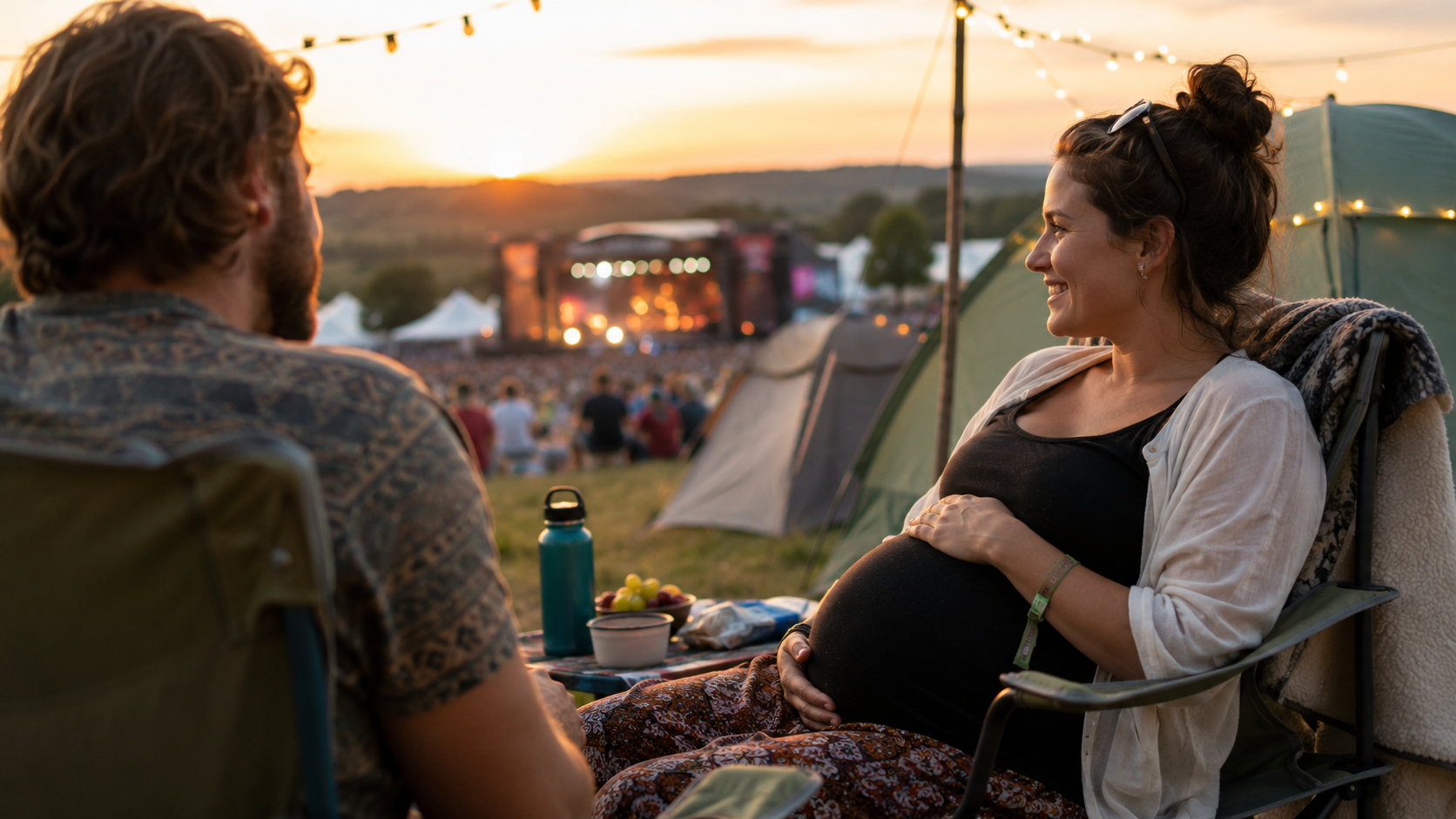
Going to a festival while pregnant is a personal decision — and one your midwife or GP should be involved in. It’s not categorically off-limits; plenty of pregnant festival-goers attend successfully each year, particularly in the second trimester. But it’s not the same festival experience as before pregnancy: alcohol is out, energy is different, comfort matters more, and some risks (loud sustained sound, crowd pressure, intense heat) need active management. This is a practical, non-medical guide to going to a UK festival while pregnant — what to think about, what to bring, which festivals work best, and what to ask your healthcare provider. This article is not medical advice. For specific medical questions about your pregnancy, consult your midwife or GP. Pairs with Festival Anxiety in Crowds UK and Festival Tips for Over 30s UK.
Festival prep, sorted. The free printable Festival Survival Guide PDF — your full pre-festival checklist.
Quick answer: can I go to a UK festival while pregnant?
Generally yes, with your midwife’s awareness, particularly in the second trimester (weeks 13-27). Talk to your midwife or GP first — they can advise on your specific pregnancy. First trimester: often manageable but fatigue and nausea are bigger factors. Second trimester (best window): energy is usually highest; bump is manageable; nausea has settled. Third trimester: usually inadvisable — increased risk of going into labour at the festival, mobility challenges, heat sensitivity. Best festivals: Latitude, Green Man, Camp Bestival, End of the Road — calm crowds, good infrastructure. Avoid: mosh pits, dense crowds, all-day sun without shade, extreme festivals (Boomtown, Download). Key kit: ear protection, comfortable shoes, sun hat, plenty of water, snacks, your maternity notes, a phone charged with midwife/maternity unit numbers.
Talk to Your Midwife or GP First
Before doing anything else, talk to your midwife or GP about your specific situation. They know your pregnancy; this article doesn’t. Specific things to discuss:
- Is your pregnancy considered low or high risk? Low-risk pregnancies have more flexibility.
- How far are you from the festival? Distance from your usual maternity care matters.
- What’s the closest hospital with maternity services to the festival? Worth knowing.
- Are there specific reasons to avoid? Some pregnancies (placenta previa, gestational hypertension, history of preterm labour) warrant more caution.
- How are you feeling currently? A great Monday at work doesn’t necessarily mean a great Saturday at a festival.
- What does your midwife think about loud sustained sound, heat exposure, and standing for long periods?
- How do you manage swelling? Festivals = lots of walking + standing.
If your midwife or GP advises against, listen. If they’re broadly fine with the idea, ask for any specific recommendations.
Trimester-Specific Considerations
First trimester (weeks 1-12)
Most-cited concerns:
- Nausea and food aversions. Festival food smells can trigger morning sickness. Plan light meals; bring ‘safe’ foods.
- Extreme fatigue. Pregnancy exhaustion in T1 is significant; festival days are long.
- Body still adjusting. Hormones, blood volume changes mean energy is unpredictable.
- Privacy. Some people prefer not to be visibly pregnant or asked questions; T1 is often a ‘not telling yet’ phase.
- Miscarriage risk. Highest in T1; some prefer to avoid travel during this window.
Suggestion: If T1, consider a 1-day festival rather than 4-day camping. Latitude has day tickets; Boardmasters has day options. Less commitment.
Second trimester (weeks 13-27) — usually the best window
Why this window is preferred:
- Energy typically returns. The T1 exhaustion subsides; many pregnant people feel notably better.
- Nausea has often settled. Food vans become enjoyable again.
- Bump is manageable. Visible but not enormous; still mobile.
- Hormones have stabilised. Emotional swings are usually less pronounced.
- Lower miscarriage risk. By T2 the major risk window has passed.
Most pregnant festival-goers choose T2. Specifically weeks 16-24 is often cited as the sweet spot.
Third trimester (weeks 28-40)
Generally inadvisable due to:
- Mobility challenges. Walking 20km/day at a UK festival is hard with a 30+ week bump.
- Tiredness. T3 fatigue is significant.
- Risk of going into labour at the festival. Most major festivals are far from maternity hospitals; emergency transfer is complex.
- Heat sensitivity. Pregnancy reduces heat tolerance; UK festival summer can be 30°C+.
- Back pain and pelvic girdle pain. Standing for hours is brutal.
- Difficulty using festival toilets. Squatting in a portaloo with a third-trimester bump is genuinely hard.
If T3, consider: Day festivals (Wireless, Parklife) near home; or a single set at a glamping option with a separate exit plan.
⚠️ After 36 weeks: don’t
Most midwives advise against attending camping festivals after 36 weeks. The risk of going into labour during the festival is real, festival medical facilities are not equipped for full birth scenarios, and the journey to a hospital from most major UK festivals takes 30-60 minutes. Some airlines won’t fly you after 36 weeks; apply the same logic to festivals.
Best UK Festivals for Pregnant Attendees
| Festival | Suitability for pregnant | Notes |
|---|---|---|
| Latitude | ★★★★★ | Calm crowds, family festival, lake, easy mobility, lots of shade |
| Green Man | ★★★★★ | Welsh countryside, smaller crowds, gentle pace |
| End of the Road | ★★★★★ | Small (~15,000), foodie, peaceful |
| Camp Bestival | ★★★★☆ | Family festival; pregnant attendees normal; lots of family infrastructure |
| Bluedot | ★★★★☆ | Smaller science/music festival; intellectual environment |
| Glastonbury | ★★★☆☆ | Possible but huge site = lots of walking. Worth considering Park area only |
| Kendal Calling | ★★★☆☆ | Lake District; smaller; manageable |
| Boardmasters | ★★★☆☆ | Coastal; manageable in T2 |
| Reading / Leeds | ★★☆☆☆ | Younger crowd, less infrastructure for pregnancy, more substance use around |
| Download | ★☆☆☆☆ | Mosh pits, dense crowds, heavy sound — not ideal pregnancy environment |
| Boomtown | ★☆☆☆☆ | 24-hour culture, intense, hilly site, drug presence |
| Creamfields | ★☆☆☆☆ | Dance focus; intense bass; long days standing |
Glamping is Strongly Recommended
Camping while pregnant is hard. Glamping addresses most of the issues:
- Real bed. Sleeping on the floor at 6 months pregnant is grim. A proper bed makes the festival doable.
- Electricity. Phone charging, hairdryer, electric kettle. Hugely helpful.
- Distance from main fields. Glamping is often quieter and slightly away from main camping noise.
- Privacy. Bell tents, yurts, tipis offer space to lie down during the day.
- Pre-pitched. No setup; arrive and rest.
- Cost: £200-£500 per person typically. Worth it. See Glamping vs Camping UK Festivals for the full breakdown.
What to Bring
- Ear protection. Loop Quiet 2 earplugs (£20-£25) — reduce noise by 27dB. Some midwives recommend hearing protection for the bump too.
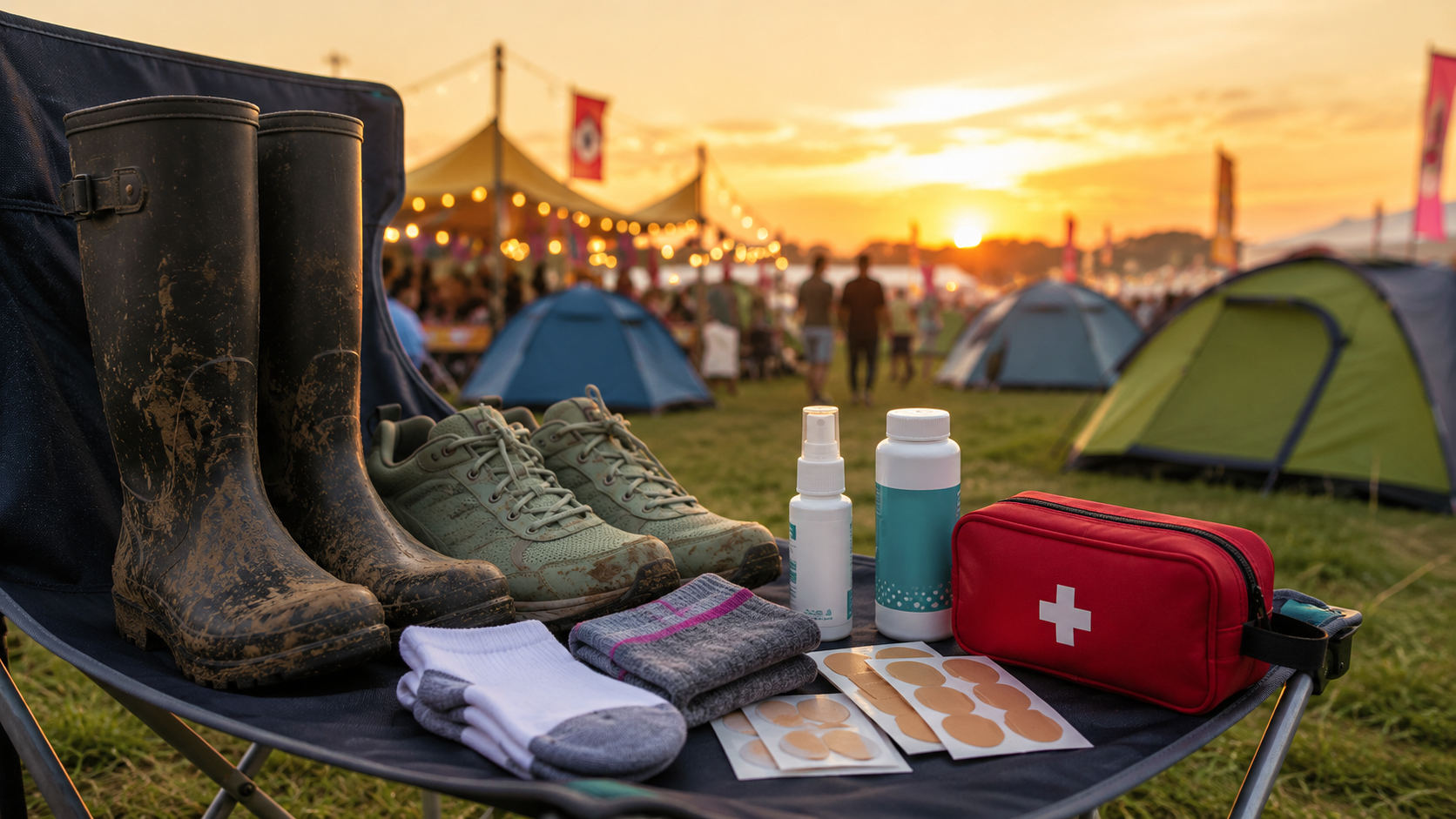
- Comfortable supportive shoes. Walking boots or supportive trainers; not wellies for full days.
- Sun hat with brim. Pregnancy reduces heat tolerance.
- SPF 30+ sunscreen. Pregnancy hormones increase skin sensitivity.
- Reusable water bottle (1L+). Constant hydration is essential.
- Light layers. Body temperature regulation is harder during pregnancy.
- Maternity notes. Print or pinned in phone — your medical history if you need festival medical care.
- Phone numbers. Midwife, maternity unit, partner — written on paper as backup.
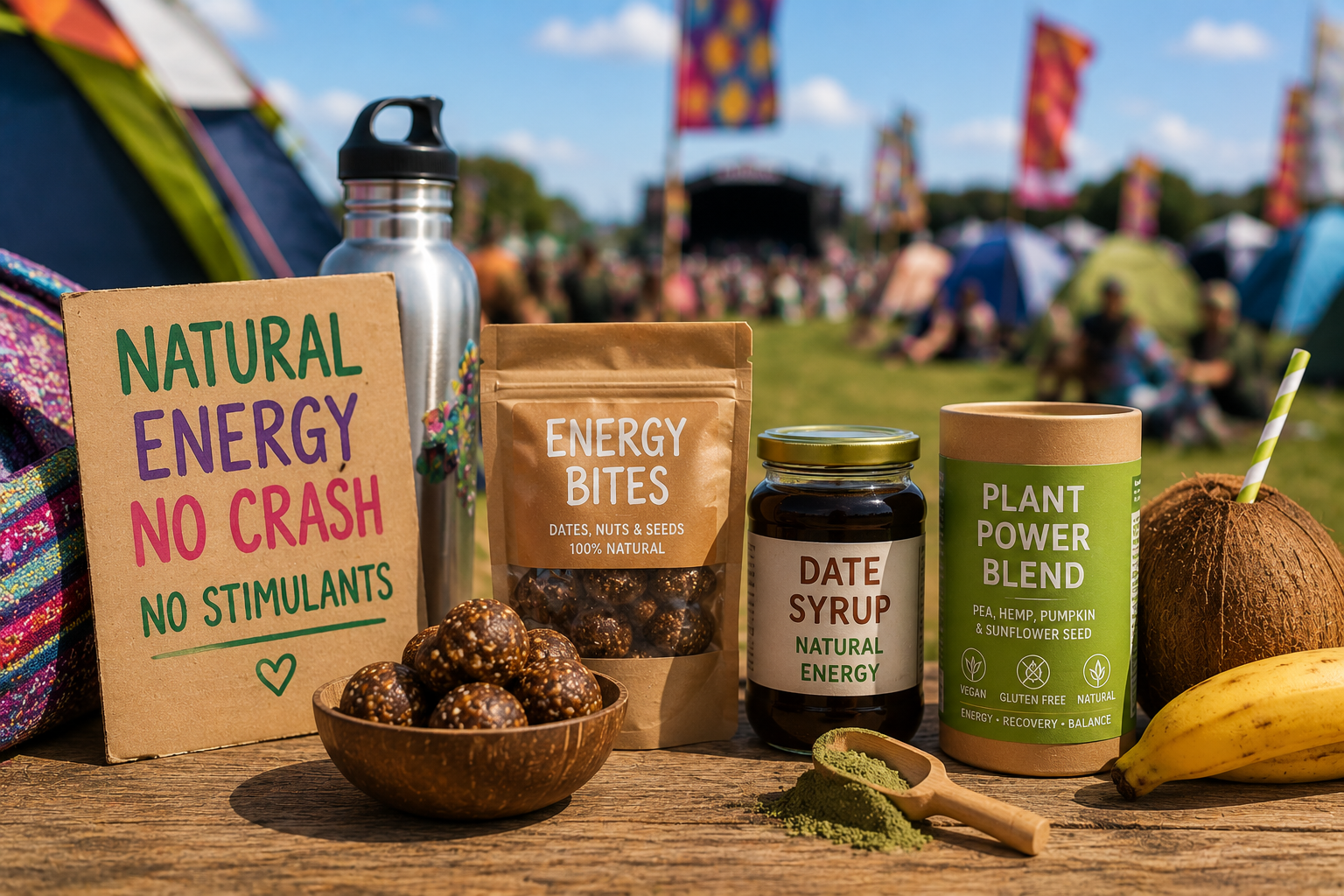
- Snacks for blood sugar management. Frequent small meals prevent dizziness.
- Antacids or your usual pregnancy meds. Heartburn flares are common.
- Camping chair or cushion. Sitting often makes festival days possible. Lightweight camping chair.
- Wet wipes. Multiple uses; pregnancy increases hygiene needs.
- Anti-nausea remedies (if approved). Ginger sweets, accupressure bands.
- Compression socks. Reduce swelling from standing.
- Cool bag / fan. Battery-powered fan for hot days.
While you’re sorting kit, grab the free Festival Survival Guide PDF for the full prep list.
Festival Strategy While Pregnant
Hydration is the most important thing
Pregnant bodies need more water; dehydration causes contractions and dizziness. Drink 3-4L per day. Refill at every water station. Skip alcoholic drinks completely; ask for alcohol-free beer or soft drinks at bars.
Crowd avoidance
Stand at the back of crowds; sides are also good. Avoid mosh pits, dense front-of-stage areas, narrow corridors during peak. If you find yourself in a crowd that’s tightening, signal you need to leave and ask people to make space (most people are very accommodating for pregnant attendees).
Sun and heat management
Pregnancy reduces heat tolerance. Strategies: peak sun avoidance (11am-3pm), shaded chill-out areas, frequent breaks, cool wet cloths on neck, battery-powered handheld fan, light-coloured loose clothing.
Toilet logistics
Pregnancy = more frequent toilet trips. UK festival toilets are challenging. Strategies: know where the welfare/family/disabled toilets are (often cleaner and quieter). Use what3words to mark them. Carry your own toilet paper. See Festival Toilet Survival UK for general guidance.
Energy management
Don’t try to do everything. Pick 2-3 must-see sets per day; rest between. Afternoon naps at the tent (especially in T1 and late T2) are key. Don’t push yourself to keep up with non-pregnant friends; they’ll understand.
Knowing when to leave
Listen to your body. If contractions start, severe headache appears, swelling worsens dramatically, or you feel unwell, leave the festival. Festival medical can help but they’re not maternity specialists. The nearest hospital with maternity services should be in your phone before you arrive.
What to Skip
- Mosh pits. Crowd pressure + bump = dangerous.
- Front rail at headliners. Heat, dehydration, crowd pressure, no escape.
- Tightly-packed tent stages. Heat and crowd density.
- All-day dance music. Sustained loud bass for hours; consider only 1-2 hours.
- Late-night silent disco. Crowd pressure and sleep disruption.
- Alcohol. No safe amount during pregnancy.
- Anti-nausea remedies you haven’t tried before. Test at home first.
- Recreational drugs. Some are particularly harmful in pregnancy.
- Hot tubs at glamping options. Some midwives advise against in pregnancy.
- Camping after 36 weeks. Just don’t.
Festival Welfare for Pregnancy Concerns
If anything feels off, festival welfare and medical can help. They have:
- Trained medical staff (paramedics, sometimes doctors)
- Communication with local hospitals if transfer is needed
- Quiet spaces for rest
- Ability to call ambulances
- Awareness of pregnant attendees’ specific needs
Don’t hesitate to use medical services. They’d much rather check you over and find everything’s fine than have you ride out something concerning.
Frequently Asked Questions
Is it safe to go to a UK festival while pregnant?
Generally yes in the second trimester (weeks 13-27), with your midwife’s awareness, at a calm-crowd festival like Latitude or Green Man. First trimester is manageable but fatigue is harder. Third trimester is generally inadvisable, particularly after 36 weeks. Always talk to your midwife first about your specific pregnancy.
What’s the best festival to attend while pregnant?
Latitude, Green Man, End of the Road, Camp Bestival, and Bluedot are top picks — calm crowds, smaller sizes, good infrastructure, less intense atmospheres. Avoid Boomtown, Download, Reading/Leeds, and Creamfields. Glampingrather than camping at any festival is strongly recommended.
Can I go to Glastonbury while pregnant?
Possible but challenging due to the huge site (lots of walking) and large crowds. If you do, consider sticking to the Park area (calmer crowds, beautiful spot), glamping rather than camping, and skipping mainstage headliners in favour of smaller acts. Talk to your midwife about your specific pregnancy.
What trimester is best for festivals?
Second trimester (weeks 13-27), specifically 16-24 weeks. Energy is usually highest, nausea has settled, the bump is manageable, miscarriage risk is lower than T1, and you’re not yet in the more difficult late-stage T3. Most pregnant festival-goers choose this window.
Should I tell festival medical staff I’m pregnant?
Yes if you need their help. They’ll handle pregnant attendees regularly and have protocols for it. Bring your maternity notes (or have them on your phone) to share if needed. Pregnant women aren’t unusual at UK festivals; staff are trained for this.
Can I camp in a tent while pregnant?
Possible but uncomfortable, especially after T2. Sleeping on the floor with a bump is hard. Glamping (bell tent, yurt with real bed) is strongly recommended — costs £200-£500 per person but transforms the festival experience for pregnant attendees. If on a tight budget, consider a day festival instead.
Should I wear ear protection while pregnant at a festival?
Yes — earplugs (Loop Quiet 2 or similar, £20-£25) reduce noise without muffling music. Some midwives recommend hearing protection in pregnancy for prolonged loud-sound exposure. The effect on the bump is debated, but the effect on your own ears is real. Use them throughout sets.
What if I go into labour at a festival?
Get to festival medical immediately; they’ll transfer you to the nearest hospital with maternity services (typically 30-60 min journey from major UK festivals). This is one of the main reasons festivals are inadvisable after 36 weeks. If at risk of preterm labour, skip festivals or attend day events near home.
Can I drink alcohol-free beer at a festival while pregnant?
Alcohol-free beer (Heineken 0.0, Lucky Saint, etc.) is widely available at UK festival bars. Some technically contain <0.05% alcohol; check with your midwife if you're strict on this. They're a good way to feel part of the social experience without alcohol risks.
Will I be able to use festival toilets while pregnant?
Yes, though they’re more challenging in pregnancy. Strategies: locate the welfare and disabled toilets (typically cleaner and less crowded), use them when needed; carry your own toilet paper and hand sanitiser; consider a Shewee or female urination device for easier standing use. See Festival Toilet Survival UK for full guidance.
Related Reading
- Festival Anxiety in Crowds UK
- Festival Tips for Over 30s UK
- Glamping vs Camping UK Festivals
- Festival Toilet Survival UK
- Festival First Aid Kit UK
Pregnancy festival planning is one piece of festival logistics. Full system in the UK Festival Survival Guide. Remember: this article is not medical advice. Consult your midwife or GP about your specific pregnancy.
Disclosure: This post contains affiliate links. If you buy through them, I may earn a commission at no extra cost to you. I only recommend gear and brands I would actually use at a UK festival.
Discover more from The Mosh Manual
Subscribe to get the latest posts sent to your email.