
Festival Toilet Survival UK 2026: Long Drops, Portaloos and the Hygiene Strategy
UK festival toilets are notoriously horrible, and yet you’ll use them 30+ times across a weekend. Long drops at Glastonbury. Portaloos at Reading. Compost toilets at green festivals. The right approach to festival toilets is one of those small skills that separates the well-prepared festivalgoer from the miserable one. Timing matters. Kit matters. Strategy matters. This is the practical guide to UK festival toilets — what to expect, what to bring, and the hygiene moves that keep you healthy across a 4-day weekend. Pairs with How to Stay Clean at a Festival UK and Festival First Aid Kit UK.
Festival prep, sorted. The free printable Festival Survival Guide PDF — your full pre-festival checklist.
Quick answer: how do I survive UK festival toilets?
Bring your own toilet paper or pocket tissues — festival supplies run out by Day 2. Hand sanitiser at every visit — non-negotiable. Antibac wipes for surfaces if you have to touch anything. Time your visits — early morning (6-9am) and during big sets (10pm-12am) have the shortest queues. Long drops vs portaloos — long drops are emptier and less smelly; portaloos are more private. Compost toilets at green festivals work fine but bring your own sawdust scoop if obvious. Female urination devices (Shewee, Pibella) are worth buying if you struggle with squat toilets or queues.
UK Festival Toilet Types
| Type | Where you’ll find them | Pros | Cons |
|---|---|---|---|
| Long drops | Glastonbury, Boomtown, larger festivals | Less smell after the first use, no flushing | Communal, no privacy doors on some |
| Portaloos (single) | Most festivals — the standard | Private, doors lock | Smell builds up, fills quickly |
| Posh portaloos / luxury loos | Glamping, VIP, some general areas | Cleaner, sometimes flushing, hand wash basin | Cost £1–£5 per use or VIP only |
| Compost toilets | Green Man, Latitude, Camp Bestival | Sustainable, less smell, environmentally sound | Less private, need sawdust scoop |
| Urinals (male) | All festivals, separate male area | Fast, no queue typically | Just for urination |
| She-pee urinals (female) | Some larger festivals | Faster than female toilets | Need a Shewee or similar device |
The Realistic UK Festival Toilet Experience
Day 1: Tolerable
Fresh portaloos, recent cleaning. Most toilets smell of disinfectant. Queues are reasonable. This is the only day toilets are anywhere near nice. Use the morning to set your strategy.
Day 2: Functional but degraded
Smell becomes obvious. Toilet paper supplies become unreliable. Queue times grow at peak hours. Cleaning crews continue work but are overwhelmed. By 6pm Day 2, you’ll need your own kit fully deployed.
Day 3: Difficult
Smell is significant. Toilet paper is gone. Some portaloos are out of service. Long drop facilities tend to hold up better than portaloos at this stage. Welfare and medical area toilets are often kept cleaner than main-field ones — worth the walk.
Day 4: Endurance test
Worst day. Limited cleaning resources, full or overflowing facilities at some sites. Strategy: use the earliest morning slot you can (5-7am, before peak use), then accept you’re holding on until you get home or to a service station on the journey back.
🚽 The morning slot is everything
The first hour after dawn (5:30-6:30am at midsummer festivals) is the cleanest toilet window of the day at most UK festivals. Cleaning crews finish their main rounds 4-5am; toilet stocks (where they restock) get refilled. Queues are non-existent. Setting a 6am alarm one morning across the weekend is worth it. Use that morning for any ‘serious’ toilet visit.
The Essential UK Festival Toilet Kit
Everything in this list fits in a small dry bag or bumbag pocket:
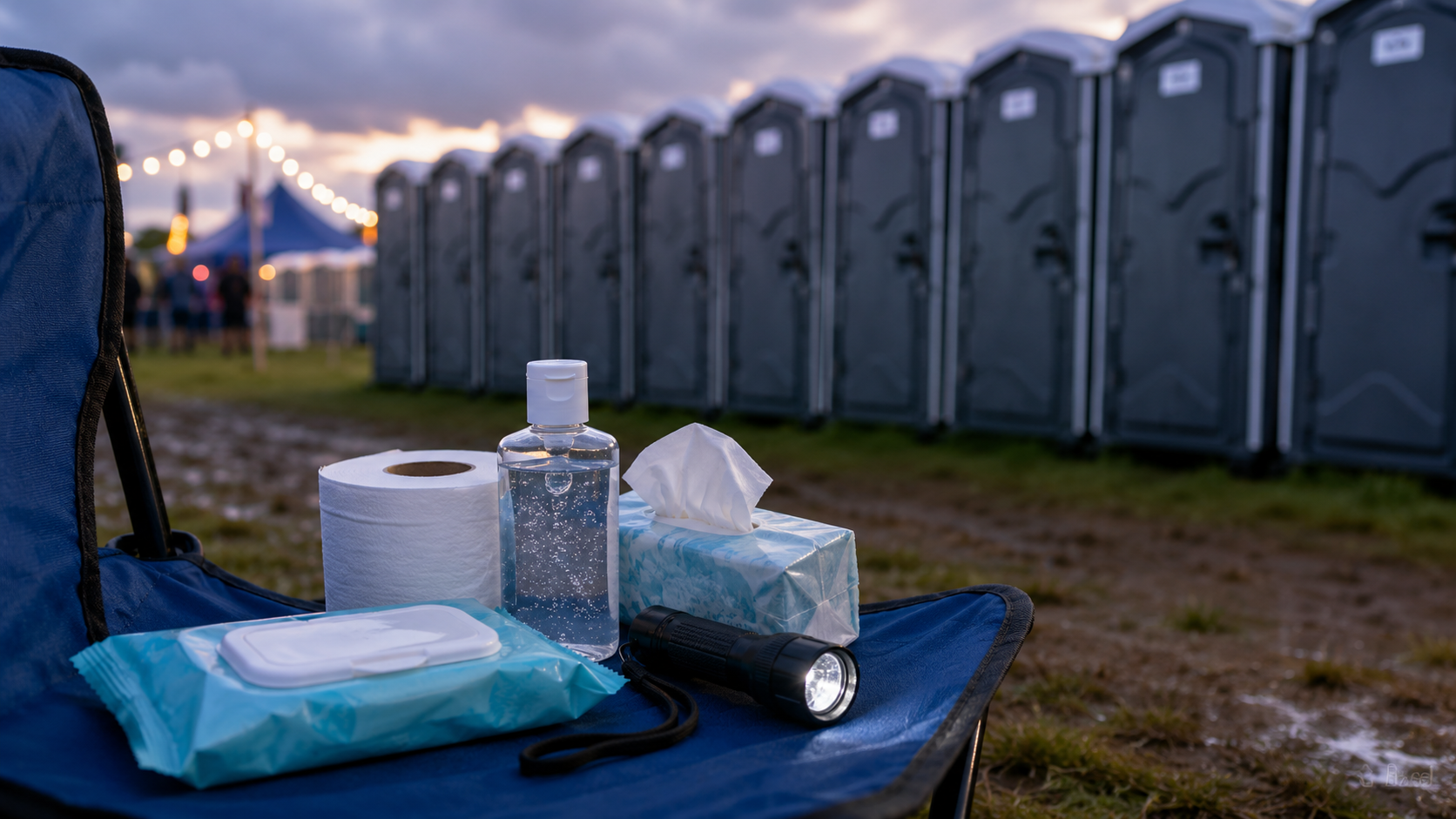
- Your own toilet paper. A travel roll or pocket tissues (£5–£10 for a pack of 10). Festival supplies run out by Day 2.
- Hand sanitiser. 60%+ alcohol. 100ml travel bottles (£3–£6).
- Antibacterial wipes. Pocket-size antibac wipes (£3–£8). For seat, surfaces, hands.
- Face masks (optional but useful). Disposable face masks (£5–£10 for a pack of 20). For the worst-smelling days. Some find them invaluable.
- Hand torch / phone torch. Toilets at night are not lit. Inside-cubicle illumination is needed.
- Female urination device (FUD). See dedicated section below; Shewee or Pibella (£10–£20). Game-changing for female festivalgoers.
- Small bag or carrier for used wipes. Biodegradable bags are excellent multi-use.
- Spare underwear in your day bag. Period-stress is a real thing; preparedness reduces anxiety.
Female Urination Devices
A female urination device (FUD) is a small funnel that lets you urinate standing up. At a UK festival, the benefits are substantial:
- Use he-pee urinals at large festivals. Some festivals (Glastonbury, Boomtown, large camping festivals) have dedicated ‘she-pee’ urinal areas. Without a FUD, you can’t use them.
- Faster individual toilet use. Squatting in a portaloo is slow; standing with a FUD is fast.
- No contact with portaloo seat. Major hygiene win on Day 3.
- Long-drop usability. Long drops are easier with a FUD.
- Emergency outdoor use. Not encouraged but possible if welfare-tested.
The main brands:
- Shewee (£8–£12) — the classic. Hard plastic, easy to clean, widely available.
- Pibella (£10–£15) — soft silicone, more flexible.
- Pee Buddy (£3–£5 for pack of 5) — disposable cardboard funnels.
- Practice at home first. All FUDs have a learning curve. 2-3 home trials avoid the festival learning experience.
Hygiene at Toilet Visits
The standard routine that keeps you healthy:
- Before entering. Hand sanitiser onto hands. Antibac wipe for the door handle if you can.
- Inside the cubicle. Antibac wipe the seat if needed (and you’re using a seat). Toilet paper goes in the toilet, not on the floor.
- After. Hand sanitiser again before touching anything. Some festivals have hand-wash stations near toilets; use them when possible.
- Don’t put anything on the floor. Bumbag, jacket, kit — they go on a hook or in your hand, never on the floor.
- Don’t touch your face or eat without sanitising first. Toilet bacteria + festival food = food poisoning risk.
- Wash hands properly when you can find a tap. Sanitiser is good but proper hand-washing is better. Welfare areas usually have hand-wash basins.
Timing Strategy
Toilet queues at peak hours are 20-45 minutes. The off-peak windows:
| Time | Queue length | Notes |
|---|---|---|
| 5:30–7:30am | Almost none | Best toilets of the day, cleaning just finished |
| 7:30–10am | Short | Most people still in tents |
| 10am–1pm | Medium-long | Breakfast/post-breakfast peak |
| 1pm–5pm | Medium | During afternoon sets |
| 5pm–7pm | Long | Dinner break peak |
| 7pm–9pm | Long | Pre-headliner peak |
| 9pm–11pm | Short | During headliner sets — best! |
| 11pm–1am | Medium | Post-headliner exit |
| 1am–3am | Short | After most have left main fields |
While you’re prepping kit, grab the free Festival Survival Guide PDF for the full festival prep list.
Compost Toilets at Green Festivals
Green Man, Latitude, Camp Bestival and increasingly more festivals use compost toilets. How they work and what to know:
- You add sawdust or wood shavings after use. A scoop is typically provided in the toilet.
- No flushing. Smell is surprisingly low because of the wood-shaving dry layer.
- Toilet paper goes in the toilet. Same as portaloos.
- Cleaning is less frequent — the bins themselves only need emptying every few days.
- Often have better ventilation than portaloos.
- Some festivalgoers prefer them over portaloos by Day 3.
Period Hygiene at Festivals
For festivalgoers who menstruate, period planning is worth dedicating prep to. The full breakdown is in Festival Period Tips UK, but the toilet-specific kit:
- Sanitary products in a dry bag — pads, tampons, or menstrual cup
- Period underwear as backup — period underwear works as a safety net
- Disposal bags — pet poo bags double as discreet disposal
- Hand sanitiser specifically for cup insertion — separate small bottle dedicated to this
- Spare underwear in your day bag — leak insurance
- Pain relief in your day bag — cramps + crowds + cold = horrible
Mistakes to Avoid
- Holding too long. Holding urine for hours increases UTI risk. Use facilities before you’re desperate.
- Not bringing your own paper. By Day 2, festival paper runs out. Bring your own.
- Touching your face without sanitising. The route from portaloo to mouth via your hand is the festival food-poisoning highway.
- Using the toilet for storage. Hooks aren’t always available; never put kit on the floor.
- Not wearing flip-flops or wellies for night visits. Trips and falls in muddy fields happen.
- Skipping toilets entirely for substance reasons. If alcohol or drugs are reducing your urge to urinate, you’re risking UTIs. Force regular visits.
- Drinking heavily at night without nearby toilet plan. 3am toilet runs from your tent are inevitable if you’ve been drinking — know where the closest is.
Toilet-Adjacent Health Issues
Things to watch for, all related to toilet patterns:
- UTIs. Hold urine too long + dehydration + wipe direction issues = high UTI risk for women. Drink water, urinate when you need to.
- Constipation. Common at festivals — different diet, dehydration, irregular sleep, stress. Stay hydrated, eat fibre when possible.
- Diarrhoea. Food poisoning or bacterial contamination from poor hand hygiene. Sanitiser, sanitiser, sanitiser. See HWL’s guide on managing this for related context.
- Period pain amplification. Standing, walking, cold = worsened cramps. Don’t be a hero; take pain relief.
- For deeper context on hydration and bowel function during stressful weekends, this guide on managing diarrhoea is a useful reference.
Frequently Asked Questions
How many toilets are there at UK festivals?
Major UK festivals provide roughly 1 toilet per 50-100 attendees. Glastonbury has about 4,000 portaloos and long drops for 210,000 people. Reading and Leeds have around 2,500 toilets each. The math means queues are inevitable at peak times.
Are festival toilets actually as bad as people say?
By Day 3, mostly yes. Day 1 they’re tolerable. The smell, queues, and cleanliness all degrade through the weekend. Bringing your own toilet paper, hand sanitiser, and antibac wipes makes the experience manageable. Welfare and medical area toilets are typically the best-maintained.
Can I bring my own toilet paper to a UK festival?
Yes — and you should. Festival toilet paper supplies typically run out by Day 2 at most major festivals. Bring travel-size rolls or pocket tissues. A 4-pack of pocket tissues (£5) plus one travel roll covers a 4-day festival for one person.
What is a long drop toilet?
A long drop is a deep pit toilet with no flushing or chemicals. Common at Glastonbury and Boomtown. Counterintuitively, they often smell less than portaloos by Day 3 because waste falls away from the seat into a deep pit. They have no privacy doors on some configurations — others have full cubicles.
Are female urination devices worth buying for a festival?
For most female festivalgoers, yes. Shewee (£8-£12) or Pibella (£10-£15) let you use standing urinals (avoiding female toilet queues), reduce contact with portaloo seats, and speed up individual toilet visits. Practice at home first — they have a learning curve.
Are festival toilets locked at night?
No — UK festival toilets are open 24 hours. Some have lighting, some don’t. A head torch or phone torch is needed for night visits at most camping festivals. Welfare and medical area toilets are typically lit; main-field portaloos often aren’t.
Do I need to pay for toilets at a festival?
Standard festival toilets are free at all major UK festivals. Premium ‘posh portaloo’ facilities (flush toilets, hand wash, often cleaner) cost £1-£5 per use at some festivals like Glastonbury and Boomtown. VIP and glamping toilets are included in the pitch cost.
How do I avoid getting a UTI at a festival?
Drink plenty of water (3L+ daily), urinate when you need to (don’t hold), wipe front-to-back, take hand sanitiser before insertion/removal of menstrual products, and consider cranberry supplements if you’re prone to UTIs. If symptoms appear, see the festival medical tent — they can prescribe antibiotics.
Is it true to avoid certain toilets at the festival?
Generally, main-field toilets near big stages are the most-used and least-clean. Toilets at the edge of camping fields are typically better. Toilets near welfare and medical tents are typically the best-maintained. The walk to better toilets is usually worth it by Day 3.
Can I bring a portable camping toilet to a festival?
Yes, portable camping toilets are allowed at UK camping festivals. £20-£50 buys a basic chemical toilet that fits inside a tent or beside it. Practical for groups of 4+ to amortise cost. Most useful for 3am visits without a long walk to the field toilet.
Related Reading
- How to Stay Clean at a Festival UK
- Festival First Aid Kit UK
- Festival Period Tips UK
- Festival Shower Options UK
- Festival Camping Hacks UK 2026
Toilet survival is one piece of festival hygiene. Full system in the UK Festival Survival Guide.
Disclosure: This post contains affiliate links. If you buy through them, I may earn a commission at no extra cost to you. I only recommend gear and brands I would actually use at a UK festival.
Discover more from The Mosh Manual
Subscribe to get the latest posts sent to your email.