
Festival Fitness Prep UK 2026: How to Train for a Weekend on Your Feet
A UK festival weekend is a sustained 4-day endurance event. 15,000 to 25,000 steps per day. Standing for 6+ hours at headliner sets. Carrying gear from car park to campsite. Sleeping badly. Eating differently. The fitter you are going in, the more festival you actually experience — fewer rest days, less burnout on Day 3, less of that horrible ‘I should be having fun’ exhaustion. This isn’t an athletic training programme; it’s basic preparation for the physical reality of a UK camping festival. For wellness during the weekend itself, see Festival Hangover Cure UK 2026 and How to Sleep at a Festival.
Festival prep, sorted. The free printable Festival Survival Guide PDF — pre-festival, pack-day and on-site survival, free.
Quick answer: how do I get fit for a UK festival?
Start 4–6 weeks before the festival. Walk daily — 30–60 minutes building to 90 minutes by Week 4. Build standing tolerance — try 2-hour standing sessions at home (kitchen counter work, walking meetings). Sleep on a mat for 3–4 nights in the final week to acclimatise to firmer ground. Hydrate consistently — 2–3 litres daily for the fortnight before. Cut alcohol back for at least 7 days before — your tolerance recovers fast and you’ll need it. Most importantly: it’s not about being a peak athlete. It’s about not being unfit. Most preventable festival burnout comes from going in cold, not from being unfit overall.
Why Festival Fitness Is Different from Gym Fitness
A UK festival isn’t a gym workout. It’s a sustained, low-intensity, multi-day endurance challenge with poor sleep, irregular eating, and zero recovery days. Specific demands:
- Walking endurance. Most festivalgoers cover 15–25km per day across the site. Glastonbury especially.
- Standing tolerance. Headline sets are 90–120 minutes. Most people aren’t used to 2 hours standing without leaning.
- Carrying capacity. Gear from car park to tent is a 15–25kg load over 500m–2km. People hurt their backs on Day 1.
- Sleep tolerance. 5–6 hours per night for 4 nights in a row, on a mat, with noise. Cumulative deficit hits Day 3.
- Recovery resilience. No rest days. Day 1 fatigue + Day 2 fatigue + Day 3 fatigue = a Day 4 wreck if not managed.
The 6-Week Festival Fitness Plan
Realistic, low-intensity, designed for people who aren’t already in training. Skip if you already exercise regularly:
Week 6 (6 weeks out): Baseline
- 20–30 minute daily walks
- One ‘long’ walk of 60+ minutes on a weekend
- Cut takeaways back; cook at home more
- Limit alcohol to 1–2 nights per week
Week 5: Build
- 30–45 minute daily walks
- One 75-minute walk on a weekend
- Add one strength session per week — bodyweight squats, plank, push-ups, 20 minutes
- Start hydrating consistently — 2 litres of water per day
Week 4: Standing
- 45-minute daily walks
- Standing tolerance: try a 90-minute standing block (kitchen counter work, standing desk, music in the kitchen)
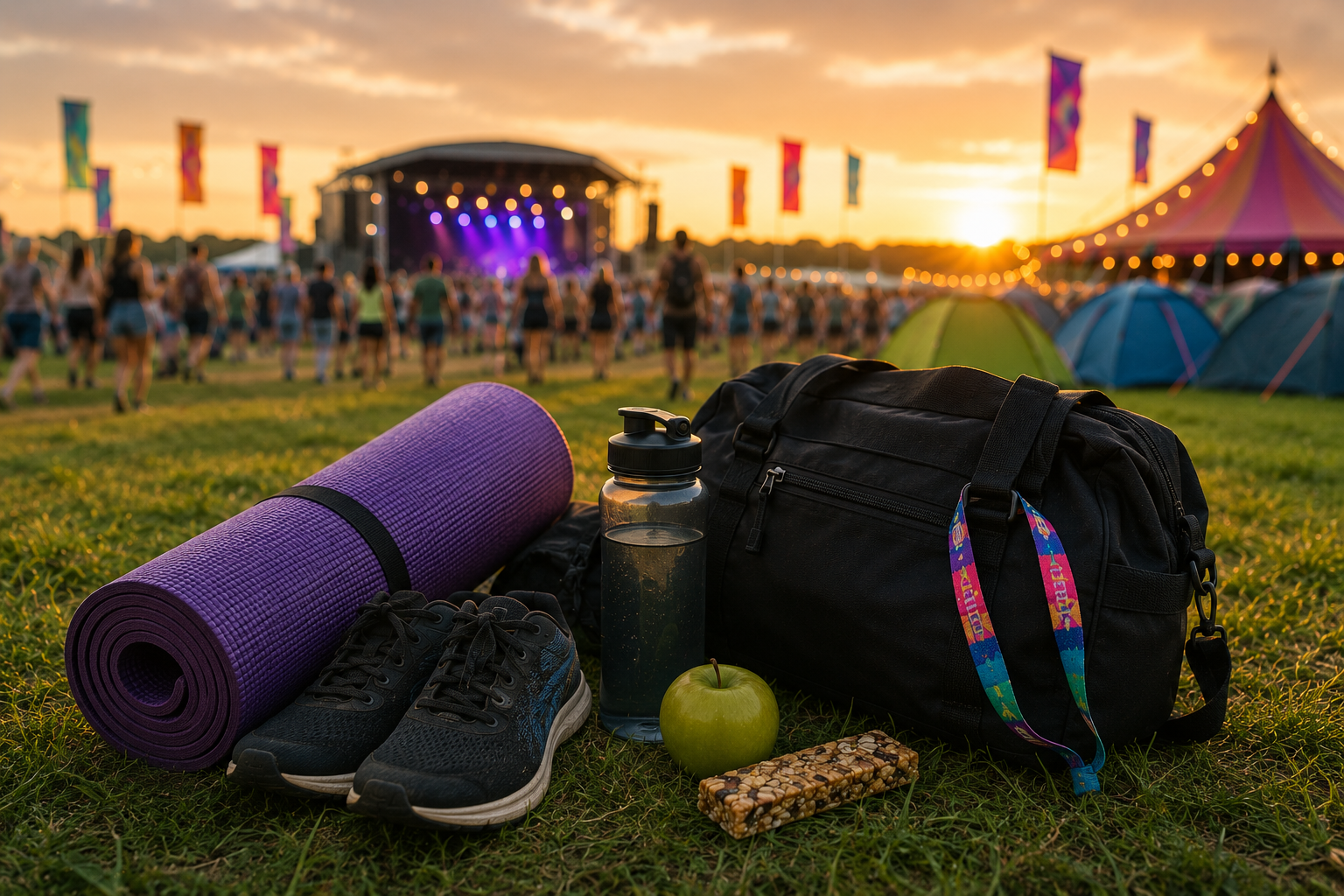
- One ‘loaded’ walk on a weekend — carry a 5–8kg backpack for 60 minutes
- One strength session of 25 minutes
Week 3: Loaded build
- Daily walks 45–60 minutes
- One 90-minute weekend walk with a 10kg loaded backpack
- Two 2-hour standing blocks during the week
- Two strength sessions per week (legs and core)
- Cut alcohol to 1 night per week
Week 2: Endurance
- Daily walks 60 minutes
- One 2-hour weekend walk with 10–12kg loaded backpack
- Sleep on a {ilink(‘mat_uk’, ‘sleeping mat’)} on the floor for 1–2 nights
- Two strength sessions
- Hydration 2.5 litres daily
Week 1: Taper and acclimatise
- Light walks only — 30 minutes daily
- Sleep on the mat for 3–4 of the final 7 nights
- Cut alcohol completely 5–7 days before
- Increase hydration to 3 litres daily
- Eat properly; rest; arrive with reserves
💡 If you’ve left it too late
Even one week of focused prep beats none. The big wins in the final week are: hydration, alcohol break, mat sleep, and one or two long walks. Don’t try to compress 6 weeks of training into 7 days — you’ll arrive injured, not fit.
Specific Fitness for Specific Festivals
| Festival | Daily Walking Demand | Standing Demand | Specific Prep |
|---|---|---|---|
| Glastonbury | 20–30km/day across site | Headline sets 90+ min standing | Highest demand — full 6-week prep advised |
| Reading / Leeds | 10–15km/day | Most stages within 5 min walk | Standing tolerance more critical than walking endurance |
| Download | 10–15km/day, mostly arena | Headline metal sets standing 2+ hours | Loaded leg/core work pays off in mosh pit |
| Latitude / Green Man | 15–20km/day, hilly site | Mixed seated and standing | Walking on uneven ground is the demand |
| Boomtown | 15–25km/day | Late-night standing | Sleep prep matters most — 4am bedtime is normal |
| Camp Bestival | 10–15km/day with kids | Lower standing demand | Endurance for carrying kids/buggies |
| Wireless / Parklife | 5–10km/day | Long sets standing | Standing tolerance is everything; one-day events |
Hydration Prep: The Underappreciated Edge
Most Day 3 festival burnout is dehydration, not exhaustion. By the time you feel thirsty, you’re already 1–2 litres in deficit. Pre-festival hydration prep:
- Two weeks out: 2 litres of water daily, separate from tea/coffee/alcohol
- One week out: 2.5 litres
- Final 3 days: 3 litres
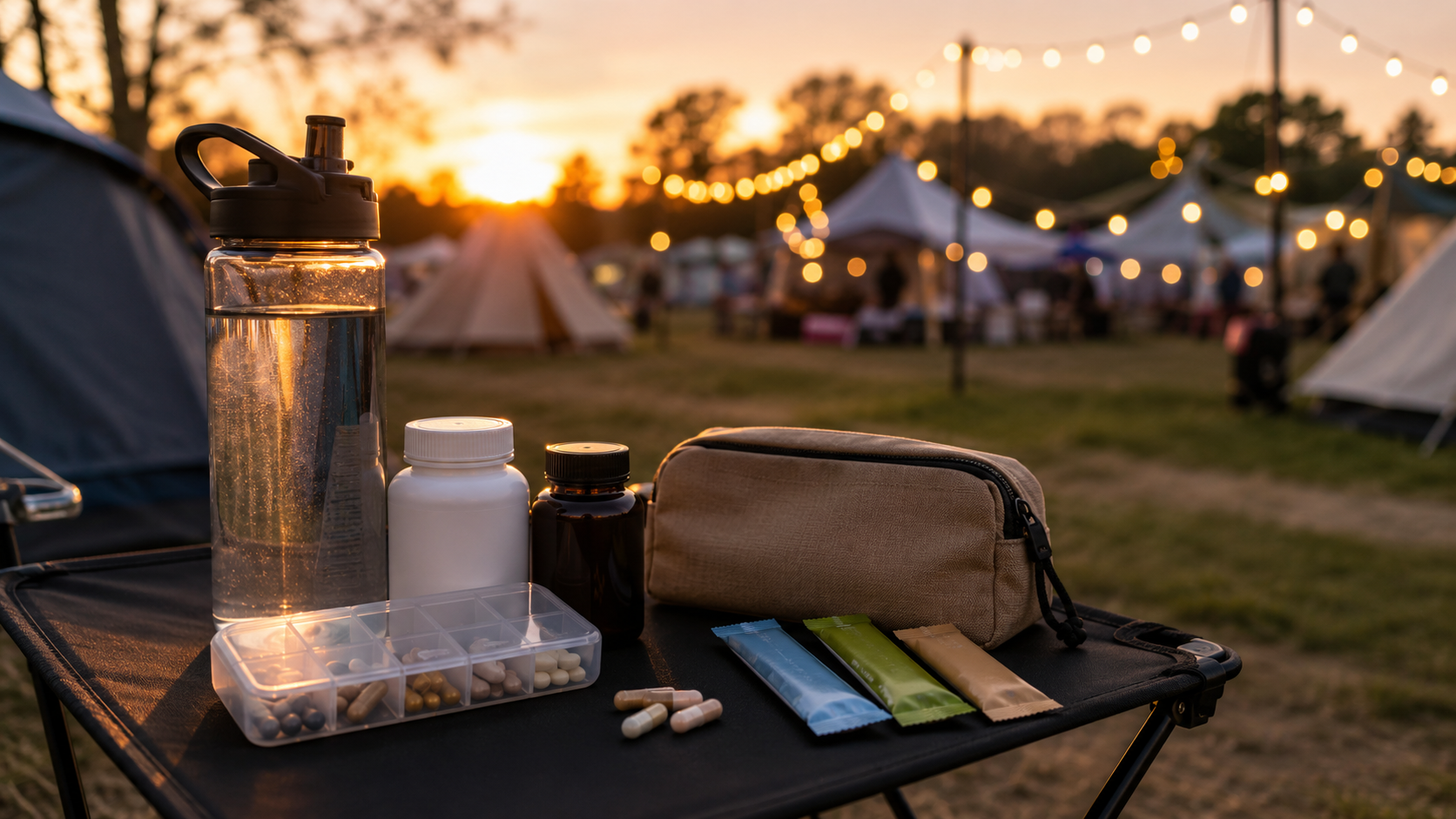
- Keep electrolyte tablets or sachets in your kit — UK festival weather still drains you
- Cross-reference: tiredness and hydration on the GLP-1 site is a useful primer on how dehydration shows up as fatigue
Sleep Prep: Earning Tent Sleep
Tent sleep is materially worse than home sleep. Light sleepers struggle most. The pre-festival sleep strategy:
- Sleep on a sleeping mat at home for 3–4 nights in the final week
- Test the sleeping bag temperature rating you’re bringing — most UK summer nights drop to 8–12°C
- Use earplugs at home for a few nights to acclimatise
- Hot tent sleep requires a different prep — see the dedicated guide if you’re at a heatwave festival
- Avoid screens in bed for the final week — your sleep architecture should be in good shape going in
- For supplemental options, magnesium supplements support sleep quality and muscle recovery — useful both pre-festival and during
Strength Prep: The 20-Minute Routine
If you do nothing else, do this 2–3 times per week in the final fortnight:
- Bodyweight squats — 3 sets of 15. Builds the leg endurance needed for standing.
- Plank — 3 sets of 30 seconds. Saves your back when carrying a loaded rucksack.
- Wall push-ups — 3 sets of 12. Upper-body endurance for the campsite life.
- Lunges — 3 sets of 10 each leg. Walking on uneven ground demands single-leg balance.
- Calf raises — 3 sets of 20. Standing tolerance.
While you’re prepping, grab the free Festival Survival Guide PDF for the rest of the planning.
During the Festival: Pacing
Even with great prep, the on-site pacing matters:
- Sit when you can. Camping chair at the campsite saves the legs.
- Eat properly Day 1. Going light on Day 1 means crashing on Day 2.
- Hydrate from the morning. Festival electrolytes; see the water bottle guide.
- Take Day 2 morning slowly. Late breakfast, slow walk, sit at the smaller stages.
- Skip a band you’re indifferent to. Conserving energy is part of the strategy.
- Sleep when tired, not when the night is done. 5 hours of real sleep beats 8 hours of restless rolling.
Frequently Asked Questions
How fit do I need to be for Glastonbury?
Glastonbury is the most physically demanding major UK festival — 20–30km of walking per day, hilly site, long standing sets at headliners. You need to be comfortable walking 90 minutes at a time and standing for 2+ hours. Six weeks of light prep gets most healthy adults there.
Is festival fitness the same as gym fitness?
No. Festival fitness is sustained low-intensity endurance with poor sleep and zero rest days. Gym fitness can be high-intensity with full recovery. A bodybuilder might struggle with the cumulative load of a festival; a regular walker will cope fine.
Can I do a UK festival without any physical prep?
Yes if you’re already moderately active. If you’re sedentary — desk job, no regular exercise — going in cold leads to Day 2 burnout, sore feet from Day 1, and missed headliners. Even 2 weeks of daily walks helps significantly.
Do I really need to sleep on a mat at home before going?
It helps. Tent sleep is materially worse than home sleep due to firmer ground, noise and temperature variation. Acclimatising for 3–4 nights softens the Day 1 sleep shock — but it isn’t essential if your mat is good quality.
Should I cut alcohol before a festival?
Yes, for at least the final 5–7 days. Tolerance returns fast and your sleep quality improves. Going in already partly hungover is a bad start to a 4-day weekend.
How much should I drink during a UK festival?
3–4 litres of water plus electrolytes daily, more in heat. Most Day 3 burnout is dehydration. Carry a refillable bottle and refill at every stop.
Should I take supplements before a festival?
Magnesium for sleep quality, electrolytes for hydration, and a basic multi-vitamin if you’re not eating well are sensible. Don’t go overboard — most performance comes from sleep, hydration and walking, not supplements.
How do I avoid sore feet on Day 2?
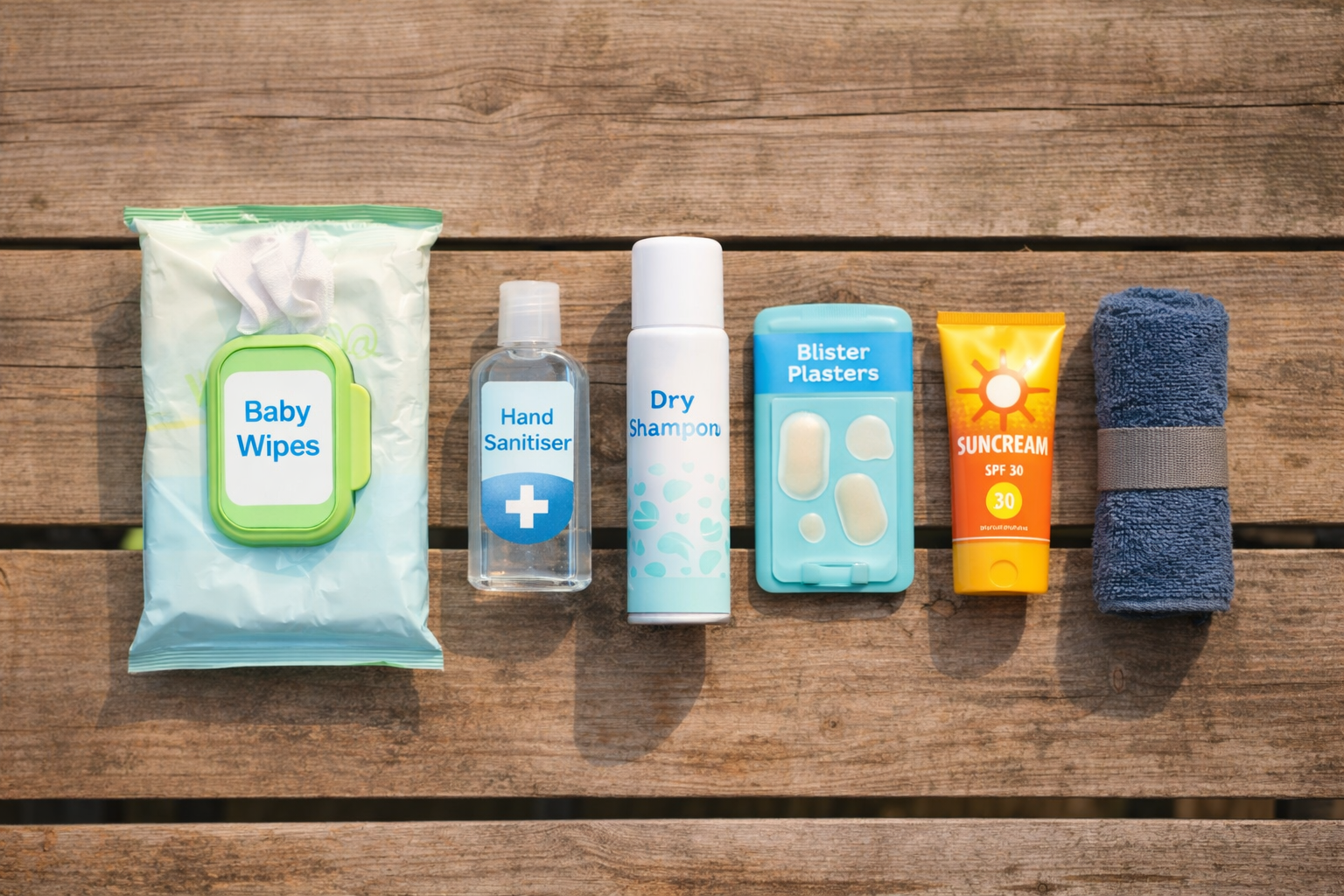
Worn-in footwear (not new), thick socks, dry feet between days, blister plasters at the first sign of friction. Sore feet on Day 2 mean the wrong footwear, not bad luck. See the wellies guide for the specific UK question.
Is there an age where festivals become physically too much?
Not really. Plenty of festivalgoers in their 50s, 60s and beyond do major UK festivals fine — with smarter prep, more rest days during, and better gear (sleeping mats, glamping options). The Festival Tips for Over 30s guide covers the specific prep.
Should I take painkillers preventively at a festival?
Don’t take painkillers as a precaution — only when needed. NSAIDs masking pain can lead to overuse and injury you don’t notice. Have ibuprofen and paracetamol in your first aid kit and use them when actual pain occurs.
Related Reading
- Festival Hangover Cure UK 2026
- How to Sleep at a Festival
- What to Put in a Festival First Aid Kit UK
- Festival Tips for Over 30s UK 2026
- Best Festival Water Bottle UK
Physical prep is one piece. Mental prep is the next. The full festival system sits in the UK Festival Survival Guide.
Disclosure: This post contains affiliate links. If you buy through them, I may earn a commission at no extra cost to you. I only recommend gear and brands I’d actually use at a UK festival.
Discover more from The Mosh Manual
Subscribe to get the latest posts sent to your email.