
Best Stage Position at a UK Festival 2026: Front, Middle, Back and Side Compared
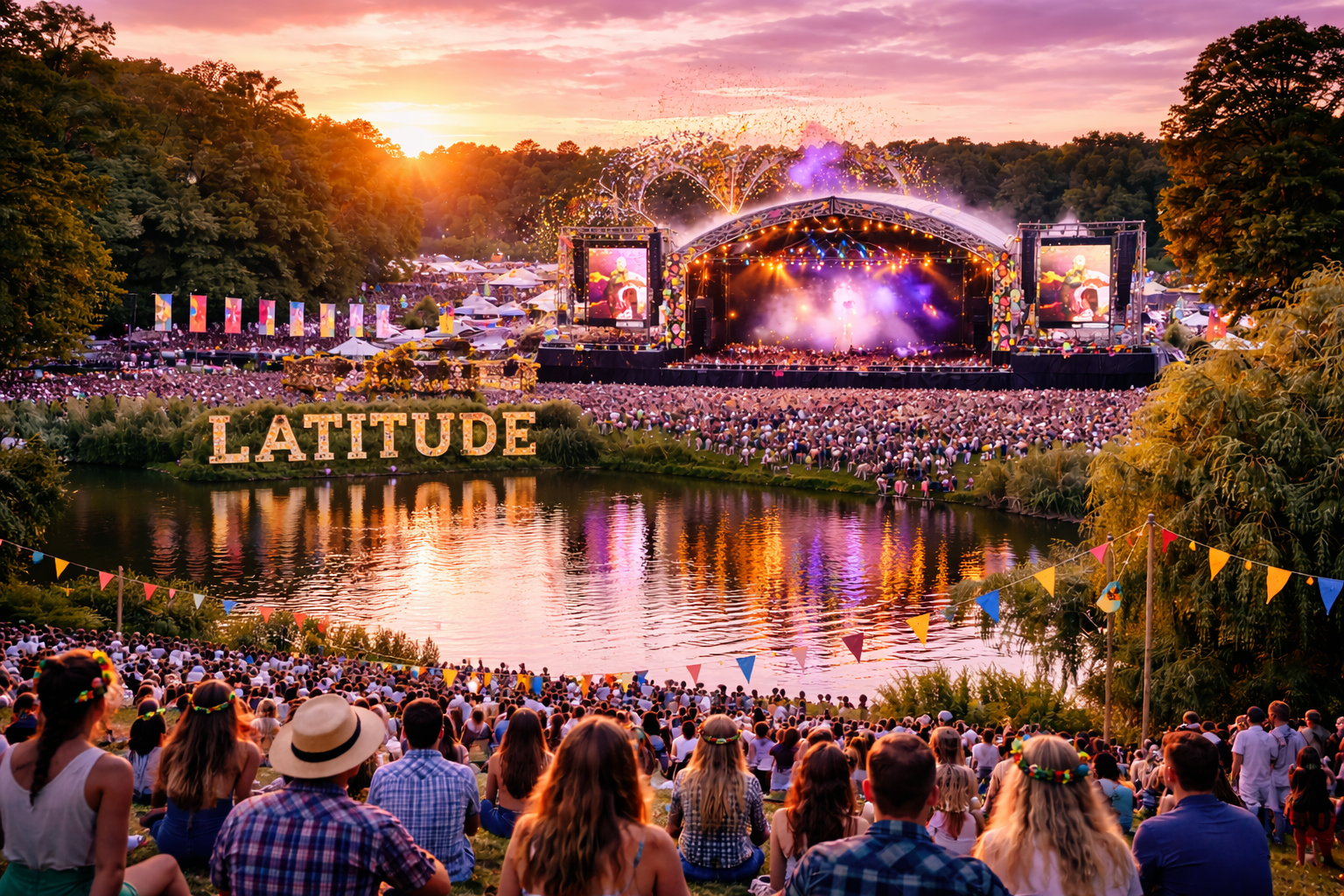
Where you stand at a festival stage matters more than people realise. Front row gives you the rush; back of crowd gives you the view. The middle has the best sound. The sides have the best escape route. And the wrong position can leave you with a 90-minute set you can barely see or hear, surrounded by people taller/drunker/more aggressive than ideal. Most festival-goers default to ‘follow the crowd’ positioning. This is the practical guide to choosing your festival stage position deliberately — based on what you want from each set. Pairs with Festival Mosh Pit Survival UK and the upcoming Festival Clashfinder Strategy UK.
Festival prep, sorted. The free printable Festival Survival Guide PDF — your full pre-festival checklist.
Quick answer: where should I stand at a festival stage?
Front (rail or front 5 rows): maximum energy, closest connection to the band — but no escape, dehydration risk, lost belongings risk. Front-middle (rows 10-30): still energetic, slightly safer, mosh pits possible but optional. Middle (centre of crowd): best sound for most stages, balanced experience, hardest to leave mid-set. Back (last 1/3 of crowd): best view, easy to leave, less crowded — but distant from energy. Side (next to sound desk): often the best mix; clear sightlines to stage and screens. Sound desk position is the audio engineer’s mix — typically the technically best sound at the festival. For headliners: arrive 60-90 minutes early for front-middle; 30 minutes for back; up to start time for sides.
How Festival Stage Positions Differ
Front rail (literally at the barrier)
The rail is the metal barrier at the front of the stage. Touching it puts you 2-3m from the band, eye-level with the performer.
Pros:
- Closest physical connection to the artist
- Eye contact with band members possible
- Often featured in photographs / live streams
- Security and water handed over from staff
- If you stay, you stay — no shuffling backwards from people pushing forward
Cons:
- No escape during the set (locked in for 90+ minutes)
- Dehydration risk (water is given out but only sporadically)
- Lost belongings risk (anything dropped is gone)
- Sound is often suboptimal (close to one speaker stack, not the FOH mix)
- Heat from lights and bodies above 30°C in summer
- Crowd surfers landing on you from behind
Front-middle (rows 10-30)
Still in the energetic zone, but with some breathing room and the option to step backwards.
Pros:
- Still feels like ‘front of crowd’ energy
- Better sound than rail position
- Mosh pit possible if you want one, avoidable if you don’t
- Can step back if it gets too intense
- Crowd surfers usually go over you, not stop on you
Cons:
- Still relatively locked in during the set
- Crowd density still high; can’t really sit down
- Need to arrive early (45-60 min before headliner)
Middle of crowd
Equidistant from front and back. Standard ‘festival experience’ position.
Pros:
- Best sound balance at most stages
- Mix of energy levels around you
- Can move sideways if needed
- Less heat than front; better visibility than back
Cons:
- Some sightline obstruction (taller people in front)
- Hard to navigate out during a song
- Often the most variable energy zone (drunk pockets, distracted phone-watchers)
Back of crowd
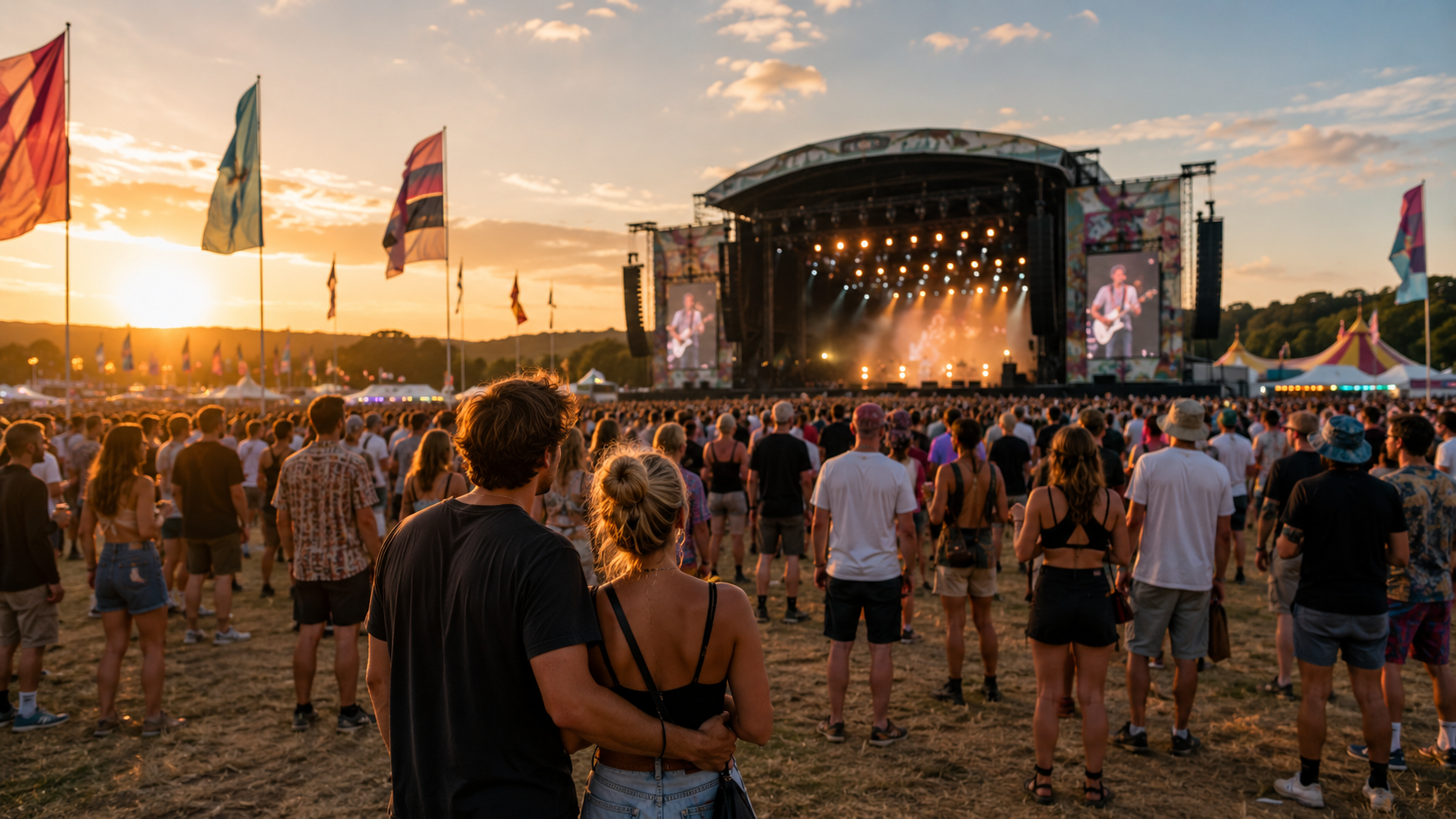
Last third of the crowd; often clear sightlines to the big screens.
Pros:
- Easy to come and go
- Sit on the ground if you want (or bring a camping chair)
- Best for groups with kids
- Can see the screens easily
- Best for chatting/socialising during sets
Cons:
- Far from the stage; relies heavily on screens
- Sound can be patchy depending on venue layout
- Less energy / atmosphere
- If band has stage gimmicks (pyro, lights), they look smaller from here
Sides (left or right of central crowd)
Edges of the crowd; often have better escape routes.
Pros:
- Easy exit
- Less crowd density
- Often have clearer side-stage views (band side-stage area visible)
- Sometimes better for photography
Cons:
- Sound is angled away from you
- Limited view of stage centre
- Less crowd energy
Sound desk position (the engineer’s spot)
The sound engineer mixes from a desk usually 50-100m back, central. Standing near the sound desk = the technically best sound at the entire stage.
Pros:
- Best audio mix at the festival
- Reasonable view (centred)
- Less crowded than front
- Best for music aficionados
Cons:
- Distance from stage = visual experience is reduced
- Energy is moderate
- Often older / more reserved crowd in this zone
💡 The ‘sound desk’ rule
If you’re at a festival mainly for the music quality, find the front-of-house (FOH) sound desk and stand within 20m of it. This is where the engineer is mixing live, so it’s the best-sounding position by design. The energy is lower but the audio is markedly better than front-of-crowd.
Position by Festival Stage Size
| Stage size | Recommended position for first-timers | Veteran’s position |
|---|---|---|
| Main stage (Glastonbury Pyramid, Reading Main) | Back-middle, near screens | Sound desk or sides for view + sound |
| Second stage (Glastonbury Other, Reading 1Xtra) | Front-middle (rows 15-30) | Front-middle or front rail |
| Tent stages (Reading Festival Republic, Glastonbury John Peel) | Anywhere in the tent | Centre near speakers or back for movement |
| Small stage (Park, Sonic, World Stage) | Anywhere — intimate | Front for connection, back for crowd-watching |
When to Arrive at Each Position
| Position | Headliner arrival time | Mid-tier band arrival |
|---|---|---|
| Front rail | 2-3 hours before | 60-90 min before |
| Front 5 rows | 90 min – 2 hours before | 45-60 min before |
| Front-middle (rows 10-30) | 60-90 min before | 30-45 min before |
| Middle | 30-45 min before | 15-30 min before |
| Back | 15-30 min before | Start of set |
| Sides | Up to start time | Walk in mid-set if needed |
| Sound desk position | 30-45 min before | Mostly available throughout |
Position by Music Genre
Rock / metal headliners
Front and middle are mosh-pit territory. Back is for chill enjoyment. Sides good for first-timers who want to leave easily. Sound desk for audio quality.
Indie / alternative
Front-middle is the sweet spot. Less aggressive than rock crowds; mosh-friendly but not mandatory. Back is fine; lots of sit-down crowd elements.
Hip-hop / rap
Front-middle for energy. Bass-heavy genres benefit from being close enough to feel the subwoofers. Back can sound thin.
Electronic / dance / EDM
Middle or front-middle for the full immersion experience. Sub-bass benefits from proximity. Side stages often have better lighting effects to see from middle.
Folk / acoustic / singer-songwriter
Anywhere; smaller stages typically. Front for connection; sound desk for audio. Crowds are gentle; mosh pits non-existent.
Pop / mainstream
Front is for hardcore fans. Middle is the family-friendly zone. Back for casual listeners. Avoid front if you don’t know all the words.
While you’re sorting set strategy, grab the free Festival Survival Guide PDF for the full prep list.
Practical Stage Position Tips
- Set a meeting point with your group. If anyone gets lost, return to that point. The main mistake: ‘I’ll just stay where you are’ then losing them in the crowd.
- Use what3words for precise locations. Way better than ‘by the food van’.
- Phone above head for photos rarely works. Quick to do; not Instagram-worthy. Front position rewards more.
- Hydrate before the set, not during. Drinking water during a tight crowd is hard. Front position especially.
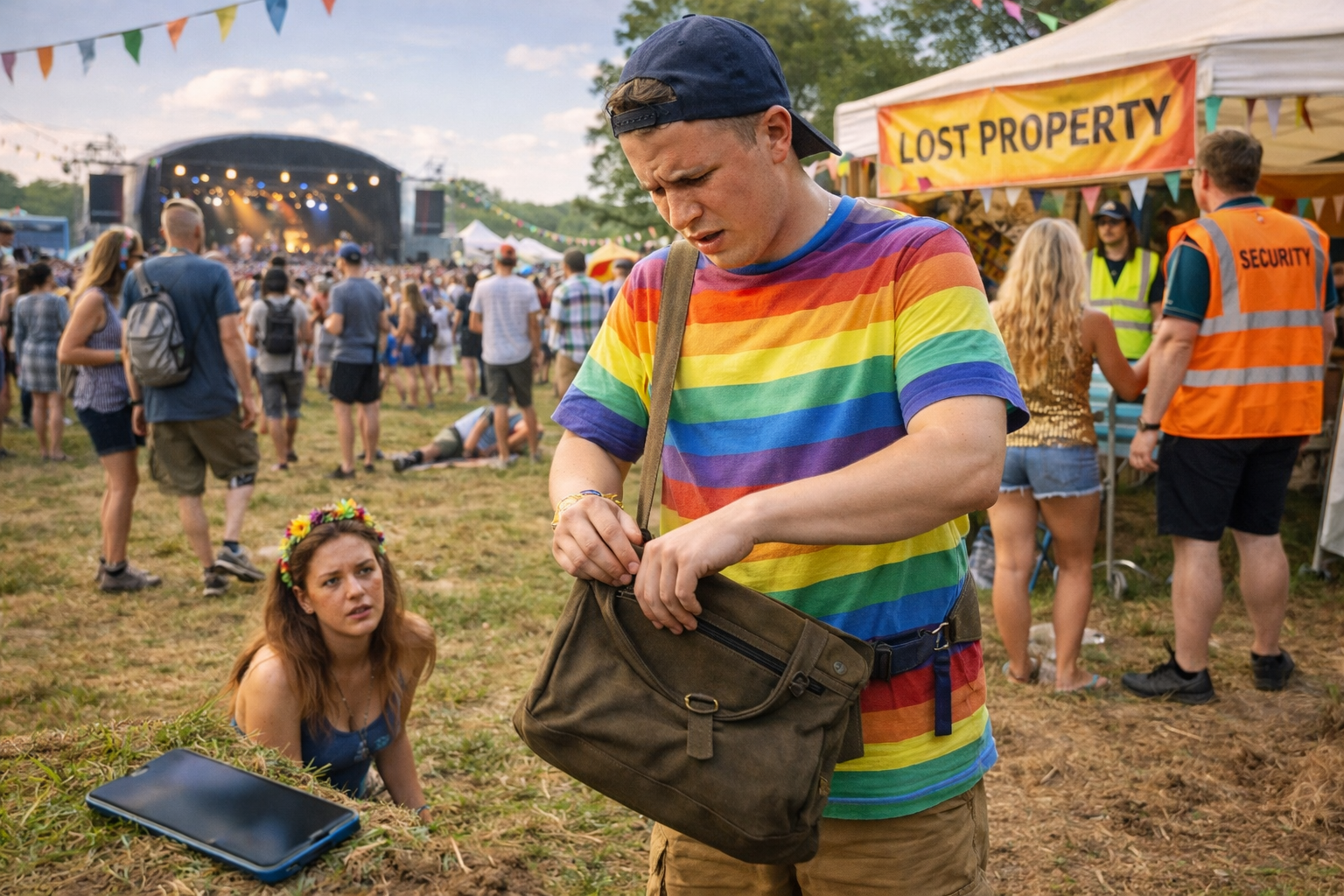
- Pee before the set. 90 minutes locked in front = bladder trouble. See Festival Toilet Survival UK.
- Light layers, not heavy ones. Body heat in a tight crowd is +5-10°C above ambient.
- Sealed water bottle, not open. Open water spills on you and other people.
- Wristbands and pockets, not bags. Hands-free for clapping and dancing. See Bumbag vs Crossbody UK Festivals.
- Earplugs in. Front position especially; permanent hearing damage from one set is real.
- Don’t push to the front during the set. Pushing creates the squashing/crushing situations that injure people.
Position for Specific Crowd Concerns
If you’re claustrophobic
Sides or back. Avoid middle or front. The mid-crowd density at headliners can trigger panic if you’re sensitive. See Festival Anxiety in Crowds UK 2026 for the full strategy.
If you’re shorter than average
Back is unfortunately worse for you — sightlines to the stage are blocked. Try sides for clearer angles, or sound desk position (often elevated platforms at major festivals).
If you’re with kids
Back of crowd, near edges, near food vendors. Big screens compensate for distance. Family viewing zones exist at most major festivals.
If you’ve got mobility issues
Designated accessible viewing platforms exist at every major UK festival. Apply for an Access ticket; arrives with a Personal Assistant ticket free. See Festival Disabled People UK 2026 for the full breakdown.
If you’re solo
Front and middle if confident; back/sides if not. Solo festival-goers often gravitate to front because it feels less awkward than standing solo at the back. Both work.
Frequently Asked Questions
What’s the best position at a UK festival mainstage?
Depends on what you want. For energy and connection: front rail or front 5 rows (arrive 90+ min early). For best sound: near the front-of-house (FOH) sound desk, typically 50-100m back centred. For best view + comfort: back of crowd with screens visible. For easy exit: sides.
How early should I arrive for a headliner at a UK festival?
For front rail: 2-3 hours before. For front 5 rows: 90 minutes – 2 hours. For front-middle (rows 10-30): 60-90 minutes. For middle: 30-45 minutes. For back: 15-30 minutes. For sides: up to start time. Major headliners (Beyoncé, Stormzy, Glastonbury Pyramid headliners) may need an extra 30 minutes for any front position.
Why does the sound desk have the best sound at festivals?
The sound engineer (FOH = Front of House) mixes the audio live from that exact position. They balance every instrument, vocal, and effect to sound right at that spot. Standing within 20m of the FOH desk gives you the audio mix the band wants you to hear.
Is the front rail safe at a UK festival?
Generally yes — security at modern UK festivals is strong (water hand-outs, crowd surfers extracted promptly, anyone in distress pulled over the rail by security). The risks: heat exhaustion, lost belongings, crushing if poorly-managed crowd. Don’t go to front rail if you’ve been drinking heavily or feel claustrophobic.
Can I leave the front of a festival crowd mid-set?
Difficult but possible. Move sideways to the edges first, then backwards through gaps that open between songs. Don’t try to push backwards centrally — you’ll fight the entire crowd. Better: pee before, hydrate before, commit to staying for the set.
Where should I stand at a small festival stage?
Smaller stages (capacity under 5,000) have less position-dependent variation. Front works well; mid-crowd is also fine. The acoustic differences are smaller than at major stages. Front is recommended for the closer connection with the band.
Is it ok to sit at the back of the crowd?
Yes — most major UK festivals have areas at the back where sitting is normal and expected. Some bring camping chairs to back-of-crowd; others sit on the grass with a blanket. This is normal behaviour and not frowned upon.
How does mosh pit positioning work?
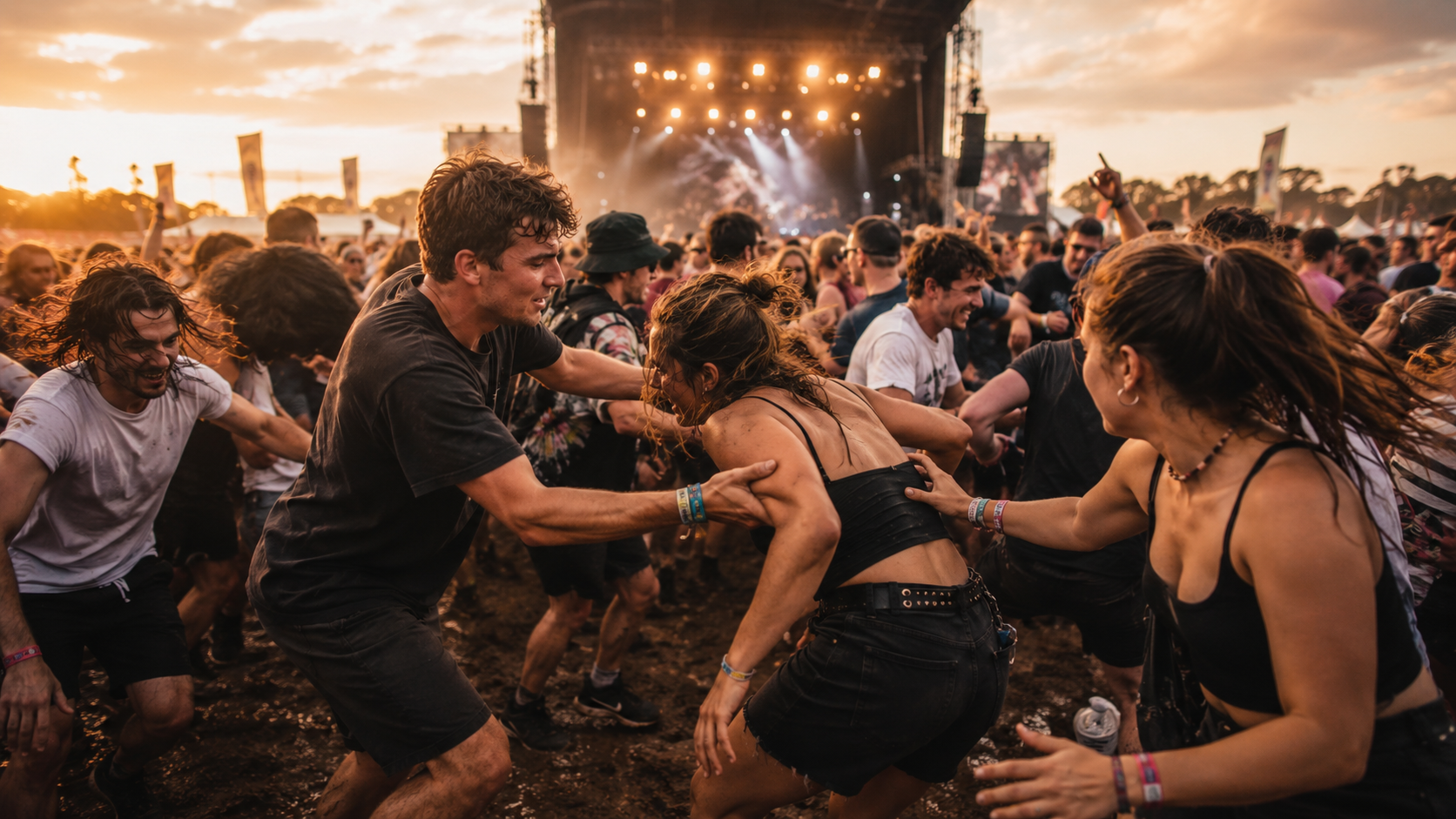
Mosh pits typically form in the front-middle (rows 10-30) area at rock/metal/punk sets. The pit centre is the most chaotic; the edges are ‘wall of death’ territory. If you want to mosh, head to the centre; if you want to be near but not in, stand 5-10 rows behind the pit centre.
Should I queue early for a non-headliner set?
For ‘cult’ or ‘breaking’ bands, yes — arrive 45-60 minutes early if you want front position. For most mid-tier bands, 20-30 minutes is plenty. For obscure smaller bands, walk in 5 minutes before start time and pick your spot.
What’s the best position for festival photography?
Sides or sound desk position. From sides you get angled shots showing band + crowd. From sound desk you get straight-on shots. Don’t try to shoot from front rail — your phone or camera is in the way of fans behind you and you’ll likely have it knocked. Telephoto lens from back works for professional setups.
Related Reading
- Festival Mosh Pit Survival UK
- Festival Clashfinder Strategy UK 2026
- Festival Anxiety in Crowds UK 2026
- Bumbag vs Crossbody UK Festivals
- Best Earplugs for Concerts and Festivals UK
Stage position is one piece of the festival experience. Full system in the UK Festival Survival Guide.
Disclosure: This post contains affiliate links. If you buy through them, I may earn a commission at no extra cost to you. I only recommend gear and brands I would actually use at a UK festival.
Discover more from The Mosh Manual
Subscribe to get the latest posts sent to your email.